For many years, I traveled for work regularly. Not little overnight trips by car to a neighboring state. I’m talking about flying to Tokyo for five days, then back to New York, followed by a two week trip to Sydney, Australia, then back to hit the ground running on a slew of projects back home. And while on these trips, there was rarely time to train. We’d arrive onsite, get our bearings, then jump right into work the next day working fourteen hours a day six days per week. By the time a day off came around, we’d all be so wiped out that most of the team would just rest on our day off. I would sometimes find a local BJJ academy where I could train, but many times I’d be so tired that I needed to let my body recover instead of training.
Nowadays, my wife and I travel mostly for pleasure, though that can often mean making trips to China to visit her family. The rural Chinese countryside doesn’t have many BJJ academies (that’s a big city thing there), so in all of these scenarios, I’ve needed to improvise to stay strong and conditioned.
Travel used to mean detraining, but nowadays it’s more about maintenance. As a middle-aged masters athlete who is still rebuilding after surgery, I don’t chase gains on the road. Instead, I protect momentum. I’m not interested in finding an academy to visit and rolling with people I don’t know or trust yet. Instead, I focus on staying conditioned, keeping my body moving, mobility, and maintaining my strength gains.
I do this by using a variety of training techniques and equipment which I’ve outlined in other posts. In this post, I’ll focus on my training philosophy while traveling.
My 3 Non-Negotiables While Traveling
Maintain Conditioning (Don’t Improve It)
I don’t worry about chasing any PR’s on the road, or even pushing my limits. Between fatigue from travel, being in an unfamiliar environment, and dehydration, I can’t afford to risk injury due to ego lifting or poor form from fatigue. I also want to allow enough time to enjoy where I’m visiting or to be able to take care of business, so I think of my workouts more as maintenance and I do my best to incorporate movement into my schedule in a natural way.
Step Count Target (8–15k Steps Per Day)
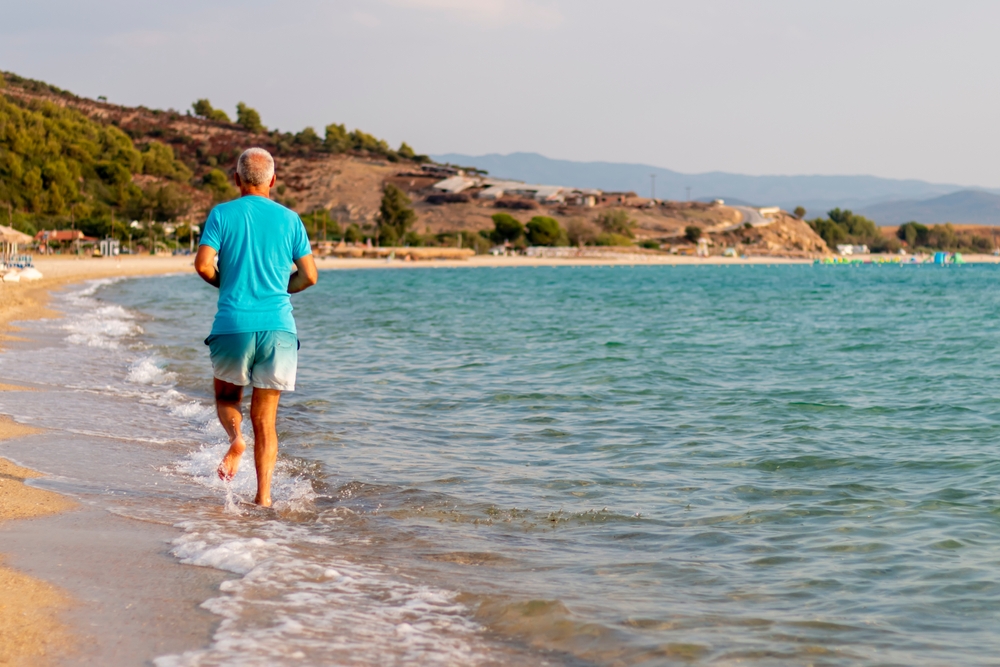
When traveling, I always aim to meet my step count. This ensures that I’m always keeping myself moving. If traveling for work, I’ll try to walk whenever possible instead of driving or taking public transit. If on vacation, I seek activities that require more physical effort, and will also go out of my way to walk more. I recently returned from a cruise during which my wife and I were advised to take a shuttle to the beach from the cruise terminal in one of the ports. After checking my GPS app on my phone, I realized that the distance to the beach was no more than about a 15-20 minute walk. By opting to walk, we actually saved time by not having to wait for the shuttle, and by the time that day was over, we had logged about 15,000 steps each.
I find the easiest way to track my step count is by using my Apple Watch as it integrates seamlessly into the Apple ecosystem. It’s also the most accurate step-tracking device I’ve tried. Rather than spending a fortune on a brand new Apple Watch, I found a fairly recent model in the Amazon Renewed department for a very reasonable price. Since the primary purpose of the watch is telling the time and step-tracking, I don’t need all of the latest and greatest features, and my Series 9 watch still has reasonably decent battery life, so it works perfectly for my needs.
Bodyweight and Resistance Band Exercises
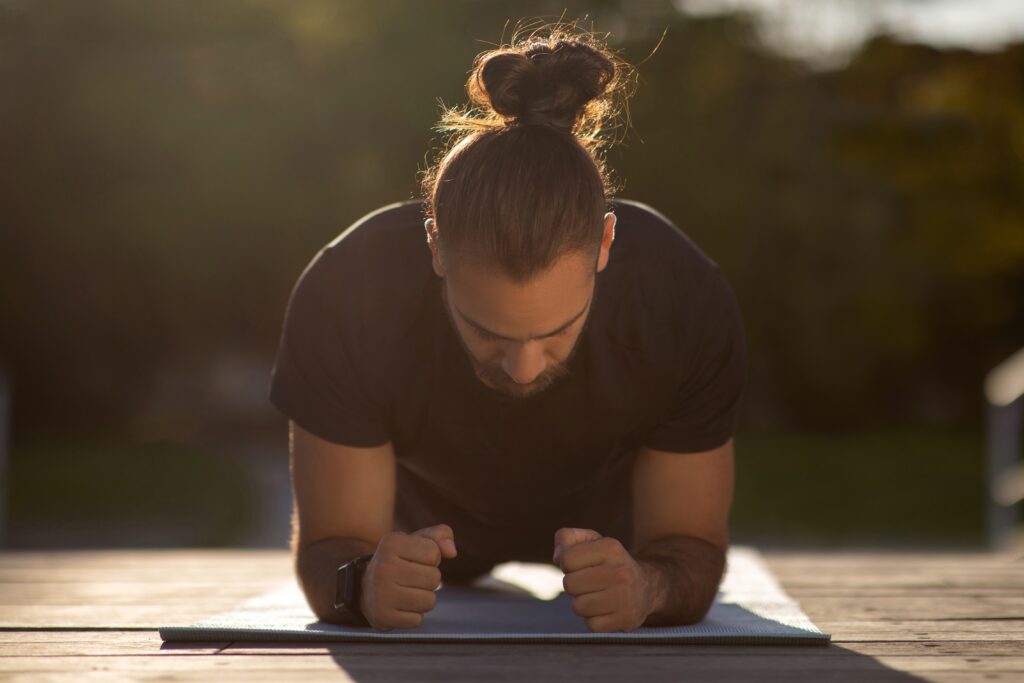
Whenever I travel, I start each day with some circuits of pushups, squats, core exercises, and resistance bands. This keeps my body moving, functions as a great warmup, and helps me to maintain a baseline level of fitness. This way, it doesn’t matter how small or poorly equipped the hotel gym is (or even if there’s no gym at all). I can still get in some sort of workout each day.
Jump Rope Intervals
I generally travel with a jump rope, so even if the weather doesn’t permit taking a walk, I can always find a spot to jump rope within a bodyweight circuit. On the aforementioned cruise, I would go to the gym everyday and do a circuit consisting of jumping rope, pushups, squats, and core work. While it’s certainly not complete by fitness standards, it’s perfectly adequate for a short period of time while traveling.
Maintain Tissue Quality
To maintain optimal tissue quality while traveling, I incorporate several strategies. The first is heat exposure. Whenever possible, I travel with a heating pad, which I use twice per day. This helps to keep the muscles warm, loose, and pliable. It also helps to soften scar tissue, which can continue remodeling for up to 18-24 months post-op. When on a cruise, I always go to the dry sauna after my daily workout (electric heating pads aren’t permitted on most cruise ships), and will perform a few minutes of scar tissue massage when in the shower.
Another key element is hydration. Even though I often don’t track my calories while traveling, or at most will do so very loosely, I always track my water intake. I strive for at least 100oz daily, and 120oz or more if possible. Between air travel and exposure to new climates, it’s essential to ensure that my body is fully hydrated to ensure that tissue remains loose and pliable.
I’m also diligent about taking “movement snacks” throughout the day. This can mean anything from doing micro-sets of various exercises throughout the day, going for a walk, or simply taking the stairs even when an elevator would be easier. In short, I incorporate the concept of “greasing the groove” that Pavel Tsatsouline describes in his training program Simple & Sinister.
The final element is performing core engagement drills daily. I usually do these first thing in the morning, though if I need to add additional sets, I’ll do so during my daily workout. I always aim to include a mix of static and dynamic exercises as well as anti-rotational exercises.
Protect the Repair (Longevity Mindset)
To protect my hernia repair, I find it essential to think and plan long-term. This means avoiding maximal lifts or ego driven workouts. As tempting as it may be to grind out an impressive HIIT program in a public cruise ship fitness center to satisfy my ego, I always focus on dialing in the technique, rhythm, and breathing during my regular workout. Trying to do a workout that’s meant to impress, even if it’s just a slightly heavier weight or getting in a few more reps, increases the odds that I’ll push my body too far or that my form or breathing will suffer, adding to the likelihood of injury or even damage to my hernia repair. At my age, especially being post hernia repair, I don’t engage in ego lifting anymore. Exercise is maintenance, protection, and meditation.
The Minimal Equipment I Travel With
In order to stay fit while traveling, I always bring a few key items with me to ensure that I’m never without the key elements I need to stay in shape no matter where I am in the world. These items include:
Lightweight Jump Rope
Several years ago I picked up an inexpensive speed rope on Amazon and it’s served me very well ever since. It’s very lightweight and portable, and it allows me to get in a few minutes of efficient cardio no matter where I am.
Resistance Bands
I have several sets of resistance bands, and I bring a combination of looped resistance bands (used for clamshells and hip flexor strengthening exercises) as well as longer resistance bands that aren’t looped, which I use for core exercises and performing various versions of presses, rows, and other standard exercises. While they don’t provide the same level of resistance as a moderately heavy kettlebell will, they at least allow me to train the movements with some degree of resistance.
Supplements
I always bring a pill organizer containing my various supplements that I take daily. While at home I take creatine and collagen peptides in powder form, I bring them in capsule form when I travel. This makes them easier to travel with and eliminates the possibility of having to explain the existence of a mysterious white powder in my luggage. I also bring Vitamin C, Vitamin D, Magnesium, Zinc, and a MultiVitamin. While I recognize that the science can be mixed regarding supplementation, I add the multivitamin just in case I’m unable to get enough nutrients while on the road.
I also pay attention to my protein intake to promote tissue strength and health. Even at home I try to avoid protein powder unless I absolutely don’t manage to get adequate protein during the day, but when I do take protein powder, I usually opt for Premier Protein, which I purchase on Amazon. When traveling, I do my best to get high quality protein from a variety of sources. As traveling with protein powder and a blender bottle can be unwieldy, I simply avoid it altogether and opt for protein from natural sources.
My 20-Minute Hotel Room Protocol
Even when I don’t have access to a gym, it simply doesn’t matter. By using the minimal equipment I travel with, I can get in a great workout anywhere. Here’s how I structure the most basic of workouts to enable me to maintain a baseline level of fitness on the road.
Warmup (5 minutes)
- Hip Circles
- Marching in place
- Cat-cow stretch
- Thread the needle
- Banded clamshells
- Glute bridges
- Banded hip flexor march
Main Circuit
- Jump rope (about 30-60 seconds)
- Pushups
- Squats
- Core
I repeat this as many times as needed per feedback from my body, usually about 4-5 sets. If I wish to incorporate more movements, I’ll add the resistance bands to include the following as well:
- Overhead presses
- Bent over rows
- Deadlifts
Overhead pulls (anchor the resistance band on a table leg, lay on the back facing away from the table, and pull the band ends toward me to perform the overhead pulls in a horizontal position).
I will usually make the pushup / squat / core / jump rope portion of the workout the main element of the workout and will add the additional resistance band elements as auxiliary movements while traveling. Throughout all of this, I focus on proper core engagement and breathing.
What I Don’t Do Anymore
As mentioned previously, I don’t chase any personal records while on the road. Between mental and physical fatigue along with being in an unfamiliar environment, it’s too easy to allow ego to creep in. I focus instead on form, breathing, proper core engagement, and listening to my body. If I begin to feel fatigued, I slow down or stop. I don’t try to push myself to my limits, and I instead focus on doing a workout that is appropriate, deliberate, and which serves a specific purpose.
Post-Flight Reset Protocol
Having experienced several long-haul flights after my hernia surgery, including flights from New York to Beijing and back, I learned quickly how much air travel can impact our bodies. Under normal circumstances, I would have felt some mild dehydration and some stiff muscles, but flying such a routing only 12 weeks post-op my symptoms were exacerbated in the form of sore tissues, fluid accumulation, and sore hip flexors. As a result, I now have a few non-negotiables that are always part of my travel plan.
Hydration
I drink plenty of water the morning of my flight, but while on the actual flight, I only drink the bare minimum to quench my thirst. While the extra water in the morning is very standard, refraining from drinking on the flight may seem counterintuitive. I’ve flown enough to know that turbulence can hit at any time, resulting in the dreaded “fasten seatbelt” sign. Having experienced being stuck in my seat for several hours with a full bladder, I have no wish to experience this again, so I accept a lower hydration level at this point. However, I do sometimes find it helpful to bring electrolyte powder with me such as Liquid IV to mix with my water on the plane to assist with adequate hydration. I also eat plenty of fruit and minimize salt intake. And upon landing, I drink as much water as my body will handle for the next few days until my body is rehydrated.
Long Walk After Landing
Aside from the often long walk from the plane to the immigration area, I try to take a long walk once I reach my final destination. This helps with lymphatic drainage, getting the blood flowing again, relaxing the hip flexors, and releasing accumulated tension in the lower back from sitting.
Jump Rope
If there’s a hotel gym, I’ll stop by to do a few sets of jumping rope to help restore elasticity, tissue glide, and as an additional aid to lymphatic drainage. It also feels great to get the heart pumping a bit, especially after a 14-18 hour flight.
Light Core Activation
While jumping rope and walking will help to activate the core, I find that some light mobility work along with gentle core exercises help tremendously, especially after the amount of compression the core experiences while remaining in a seated position for such a long period of time. It’s also a great way to reset the body after traveling.
Why This Matters For Masters Grapplers
For older BJJ and other combat sport practitioners, we need to think about how we can continue training into our 60’s, 70’s, and beyond. Since we don’t recover as quickly as athletes who are in their 20’s, we need to think more about sustainability. These protocols are advisable for athletes of any age, but the benefits are certainly felt more by older practitioners. Our bodies are more prone to soreness, reduced mobility, and feeling the effects of accumulated injuries, so these protocols are a must for anyone above a certain age. These practices will enable us to train longer in life, reduce the impact of travel on our bodies, and enable us to return to our regular training routines much more quickly than without these protocols. And for older grapplers who are traveling to compete, these things are absolutely essential to ensure that our bodies are ready for the demands of competition within a day or two of arriving at our destination.
In short, having a strategy to stay fit while traveling and to recover quickly from travel is a necessity for anyone, but is truly non-negotiable for older athletes. This aids in injury prevention, keeps us in a healthy state of mind while traveling, and helps us to be ready for training or competition much sooner than without. In order to continue training well into old age, consider adopting your own version of these protocols to ensure you can recover from your travels as quickly and as effortlessly as possible.
To view Amazon Renewed Apple Watch on Amazon, click here.
To view TheraBand resistance bands on Amazon, click here.
To view WOD Nation jump rope on Amazon, click here.
To view Sunbeam XL heating pad on Amazon, click here.
To view Fit Simplify Looped Resistance Bands on Amazon, click here.
To view Barhon Pill Organizer on Amazon, click here.
To view Nutricost Creatine on Amazon, click here.
To view Sports Research Collagen Peptides on Amazon, click here.
To view Optimum Creatine Capsules Amazon, click here.
To view Vital Vitamins Multi Collagen Capsules on Amazon, click here.
To view Nature’s Bounty Vitamin C on Amazon, click here.
To view Nature Made Vitamin D3 on Amazon, click here.
To view MegaFood Magnesium Glycinate on Amazon, click here.
To view Nature’s Bounty Zinc on Amazon, click here.
To view MegaFood MultiVitamin for Men 55+ on Amazon, click here.
To view Premier Protein Powder on Amazon, click here.
To view Liquid IV Electrolyte Powder on Amazon, click here.
BudoBelly is a participant in the Amazon Services LLC Associates Program, an affiliate advertising program designed to provide a means for us to earn fees by linking to Amazon.com and affiliated sites.