When we talk about staying fit after 50, we tend to focus on exercise. There’s a lot of talk about strength training, cardio, mobility, walking, martial arts, and nutrition. All of those things are important, but there’s another part of staying healthy and physically capable as we age that deserves just as much attention, that part is sleep.
I’ve become increasingly aware of how much a good night’s sleep affects almost everything else I do. If I’m training boxing, lifting kettlebells, walking regularly, working long hours, and trying to remain active, sleep isn’t simply the period when I’m not doing anything. It’s part of the program.
And as I’ve gotten older, I’ve found that good sleep doesn’t necessarily happen automatically. Creating the right conditions for sleep has become increasingly important.
What Is Sleep Hygiene?
Sleep hygiene is simply the collection of habits and environmental factors that help promote consistent, high-quality sleep. That includes obvious things such as what time you go to bed, but it also includes your bedroom environment, caffeine consumption, evening activities, exposure to light, stress levels, exercise, and the routine you follow before going to sleep.
I like to think about it in much the same way I think about training. If I want to have a productive workout, I don’t just walk into the gym and hope everything works out. I warm up, choose appropriate exercises, manage intensity, and pay attention to how my body responds.
Why shouldn’t we approach sleep with the same intentionality?
Sleep Becomes Even More Important When You Train After 50
One of the lessons I’ve learned about training as I’ve gotten older is that recovery matters.
You can still train hard, you can still box, lift weights, practice martial arts, hike, run, or pursue whatever physical activities interest you. But your ability to recover from those activities becomes an increasingly important part of maintaining them over the long term.
Sleep plays a major role in that process. A poor night’s sleep can affect how energetic and mentally sharp I feel the following day. It can also change how enthusiastic I am about training. Conversely, after a genuinely good night’s sleep, I often feel considerably more prepared to train.
For those of us who want to remain physically capable into our 50s, 60s, 70s and beyond, consistently sacrificing sleep while simultaneously demanding more from our bodies doesn’t make much sense.
Create a Consistent Evening Routine
One of the most useful things I’ve found is having a predictable period in the evening when I deliberately begin winding down.
Modern life makes this surprisingly difficult. We can sometimes work until bedtime. We have phones, computers, television, social media, email and a seemingly endless supply of news and entertainment competing for our attention. It’s very easy to remain mentally stimulated right up until the moment our head hits the pillow.
I’ve found that creating a transition between the activity of the day and sleep works much better for me. My own routine usually includes a hot shower, prayer, and some quiet reading. These are simple things, but together they send a very different message to my mind and body than answering emails or scrolling through my phone.
Prayer is particularly useful for me because it creates a clear transition away from the concerns of the day. Regardless of someone’s religious beliefs, I think there is considerable value in having some kind of quiet contemplative practice at night, whether that involves prayer, meditation, breathing exercises, journaling, or simply sitting quietly.
The important thing is learning how to downshift.
Make Your Bedroom a Place for Sleeping
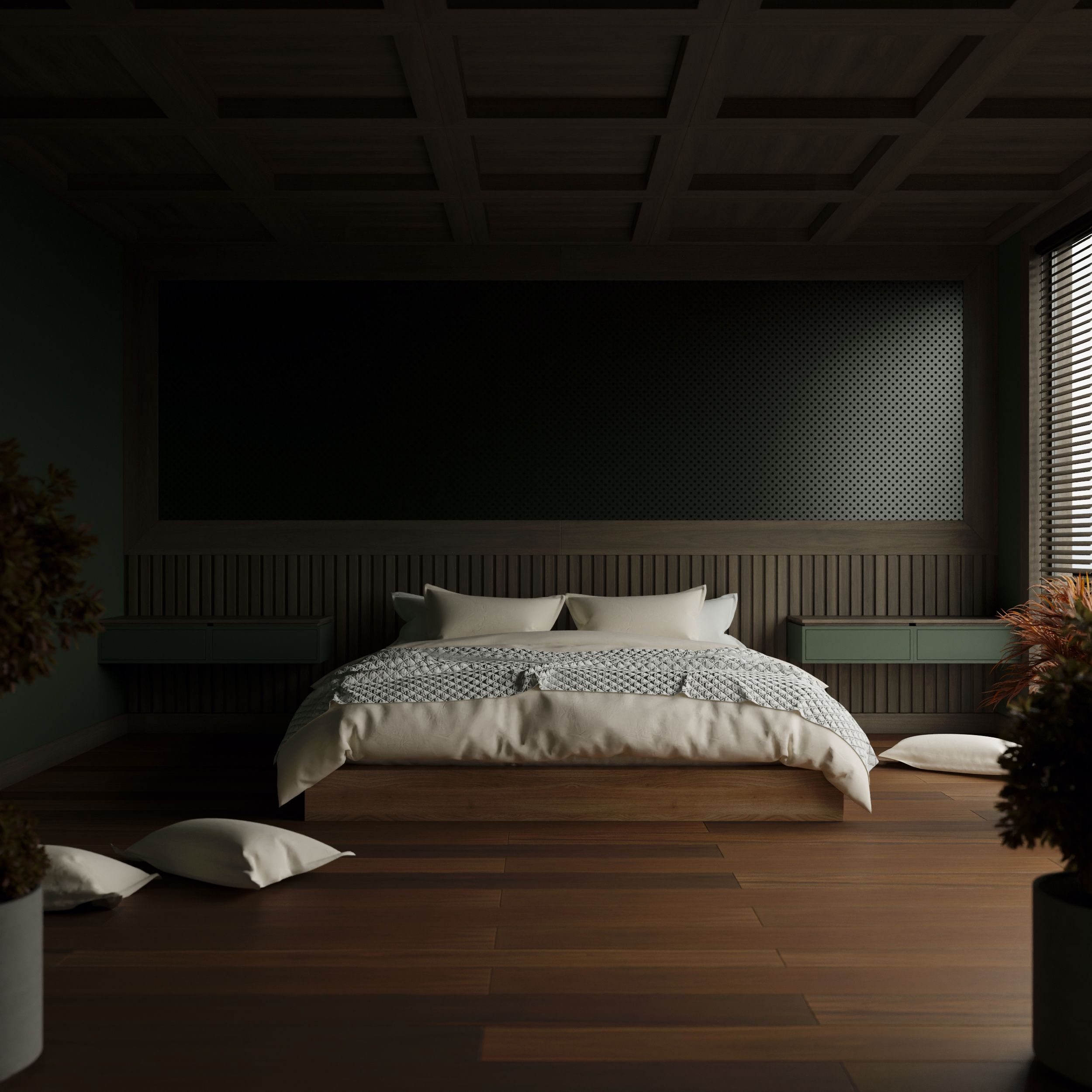
Your environment matters. A bedroom that is quiet, dark, comfortable, and relatively cool is much more conducive to sleep than one filled with light, noise and distractions.
Quiet is particularly important to me. I’ve discovered that when my sleeping environment is genuinely peaceful, the difference in the quality of my sleep can be substantial.
This can require some experimentation. Blackout curtains, an eye mask, earplugs, white noise or simply eliminating unnecessary sources of light and sound can make a surprisingly large difference.
Your bedroom doesn’t have to resemble a laboratory. The goal is simply to remove as many obstacles to sleep as reasonably possible.
Pay Attention to Caffeine
Many of us rely on caffeine, particularly when we’re balancing careers, families and training. But caffeine stays in the body for a long time.
Someone who has no trouble falling asleep after an evening cup of coffee may still find that caffeine affects the quality of their sleep. I’ve found it useful to think not only about how much caffeine I consume, but also when I consume it.
For someone struggling with sleep, moving the last coffee of the day earlier may be one of the simplest experiments to try. That’s why I never drink coffee after noon, and I limit my coffee intake to two cups per day.
Exercise Helps — But Timing Also Matters
Regular physical activity can be enormously helpful for sleep. Walking is particularly useful because it combines movement with time outside, and daytime light exposure can help reinforce the body’s natural sleep-wake cycle.
Hard training is slightly different. Some people can finish an intense workout late at night, take a shower and immediately fall asleep. Others find that boxing, heavy strength training or hard conditioning leaves them too stimulated to sleep.
There isn’t necessarily one correct schedule. Pay attention to your own response. I find that training too late in the evening makes it difficult for me to fall asleep, so I try to limit those to specific classes I want to take with certain coaches. Otherwise, I do my best to schedule my boxing training for late afternoon or early evening to help ensure quality sleep. I’ve learned this over many years of training through experimentation.
That’s a recurring theme with sleep hygiene: experiment, observe and adjust.
Supplements Can Help, But They Aren’t a Substitute for Sleep Hygiene
There are also supplements and other products that people use to support sleep.
Magnesium is one that has worked well for me. I currently take 300 mg twice per day, once in the morning and once in the evening. Combined with my evening routine, I find it helpful for sleeping through the night and for enabling a deeper sleep.
That doesn’t mean 600 mg of supplemental magnesium per day is appropriate for everyone. Magnesium comes in different forms, supplemental magnesium can cause gastrointestinal side effects, and it can interact with certain medications. Anyone considering a substantial daily dose should discuss it with a physician or pharmacist, particularly if they have kidney problems or take prescription medications.
Melatonin is another commonly used sleep aid. I view it somewhat differently from magnesium because melatonin is a hormone involved in regulating the body’s sleep-wake cycle. More isn’t necessarily better, and I wouldn’t assume that taking a large dose every night is automatically beneficial simply because melatonin is available over the counter. Personally, I’ve not had much success with melatonin, though it’s been a game changer for many other people, so it’s absolutely worthy of consideration.
Some people also use glycine, L-theanine, chamomile or other supplements for relaxation and sleep. The evidence isn’t equally strong for every product, and supplements shouldn’t be treated as interchangeable with prescription medications or as guaranteed solutions.
I also use a CBD gummy in the evening and find that it helps me relax. Again, that’s my personal experience rather than a recommendation that everyone use CBD. CBD can cause side effects and interact with medications, and product quality and composition can vary.
My larger point is that I don’t think of any supplement as the thing that makes me sleep.
Instead, supplements are one small part of a much larger routine.
My Current Sleep Routine
At the moment, the combination that works particularly well for me is remarkably simple:
- Magnesium in the morning and evening
- Regular physical activity during the day
- A hot shower in the evening
- A CBD gummy
- A quiet sleeping environment
- Prayer
- Reading before bed
There isn’t anything revolutionary about this routine, though that’s precisely why I like it.
I’m not trying to “hack” sleep. I’m trying to give my body and mind a series of consistent signals that the day is over and it’s time to rest. And I think consistency may be more important than finding the perfect supplement, gadget or sleep technique.
Don’t Turn Sleep Into Another Competition
People who enjoy training can have a tendency to quantify everything.
How many steps did I take? How much did I lift? How many rounds did I box? What was my heart rate? How many hours did I sleep?
Sleep trackers can provide useful information, but I don’t think we should allow sleep itself to become another performance test. I choose to not use any sleep tracking as they create anxiety for me as I try to fall asleep, but this is another aspect that is very much up to the individual.
If you’re constantly worrying about achieving the perfect sleep score, you’ve potentially created another source of stress around the very activity that’s supposed to help you recover from stress.
Pay attention to the data if you find it useful, but also pay attention to something much simpler: How do you feel?
Sleep Is Part of Training
When I was younger, I probably thought about fitness primarily in terms of what I did while exercising.
The older I get, the more I see health and physical capability as an interconnected system.
Training, walking, nutrition, mobility, stress management, and sleep all matter enormously.
If you want to keep boxing, lifting, practicing martial arts, hiking or simply moving well as you get older, getting enough quality sleep isn’t time taken away from your training. It’s one of the things that makes the training possible.
Sometimes discipline means getting up and doing the workout when you’d rather stay in bed.
Other times, discipline means putting everything else away, turning off the lights, and going to sleep.