Recovering from hernia surgery isn’t always as straightforward as many patients might expect. While most people anticipate some pain, swelling, and discomfort during the initial healing period, what happens when you begin experiencing unusual sensations months or even years after surgery?
You may notice an occasional pulling sensation near the surgical site, a feeling of pressure when sitting, or something that seems to shift when you move a certain way. These sensations may not even be painful, but they can be unsettling, particularly if you’ve previously experienced a hernia recurrence.
As someone who has undergone multiple inguinal hernia repairs, including surgery for recurrent hernias, I’ve become quite familiar with the physical and psychological challenges of recovery. I’ve also learned that feeling something unusual doesn’t necessarily mean something is wrong.
Not Every Unusual Sensation Means Your Hernia Has Returned
One of the more challenging aspects of recovering from hernia surgery is learning to distinguish normal postoperative sensations from symptoms that might indicate a problem.
Following surgery, it’s possible to experience a variety of sensations, including tightness or pulling around the surgical area, occasional pressure or sensation of fullness, tingling, numbness, or heightened sensitivity, mild discomfort during certain movements, or a sensation that something is moving or shifting under the skin.
These sensations can have several possible explanations, many of which don’t involve a recurrent hernia. However, it’s important to recognize that symptoms alone can’t reliably rule out a recurrence. A small hernia may not produce an obvious bulge, and persistent or changing symptoms deserve appropriate medical evaluation.
For those of us who’ve already experienced a recurrence, even a relatively minor sensation can understandably raise concerns.
Scar Tissue, Nerves, and Changes in Abdominal Mechanics
Hernia surgery changes the tissues in and around the surgical site. Depending on the type of repair, these changes may involve scar tissue, surgical mesh, sutures, and the nerves that pass through the surrounding area.
Scar tissue, for example, doesn’t necessarily have the same flexibility or mobility as the surrounding tissue. This can sometimes create sensations of tightness or pulling, particularly during movements that stretch or engage the abdominal muscles. Even nearly 18 months post-op, I still feel occasional mild tightness and other odd sensations following new movements, sleeping in an odd position, or after a more intense workout than usual.
Nerves can also contribute to unusual sensations. Irritation, sensitivity, or changes in nerve function following surgery may produce tingling, burning, numbness, or discomfort.
For patients who have undergone multiple repairs, the situation can become more complicated. Each additional procedure may introduce further changes to the tissue, and distinguishing one potential source of discomfort from another isn’t always easy.
It’s also worth remembering that not every sensation near a previous surgical site is necessarily caused by the surgery itself. Muscular tension, posture, digestive activity, and ordinary changes in abdominal pressure can produce sensations in the same general area.
The Difference Between Pain and Awareness
One distinction I’ve found particularly useful is the difference between experiencing actual pain and simply being aware of a particular area of my body. For example, I might occasionally notice pressure or an unusual sensation in an area where I’ve previously had surgery. It isn’t necessarily painful, and it may not interfere with my activities, but it attracts my attention because I associate that area with previous medical problems.
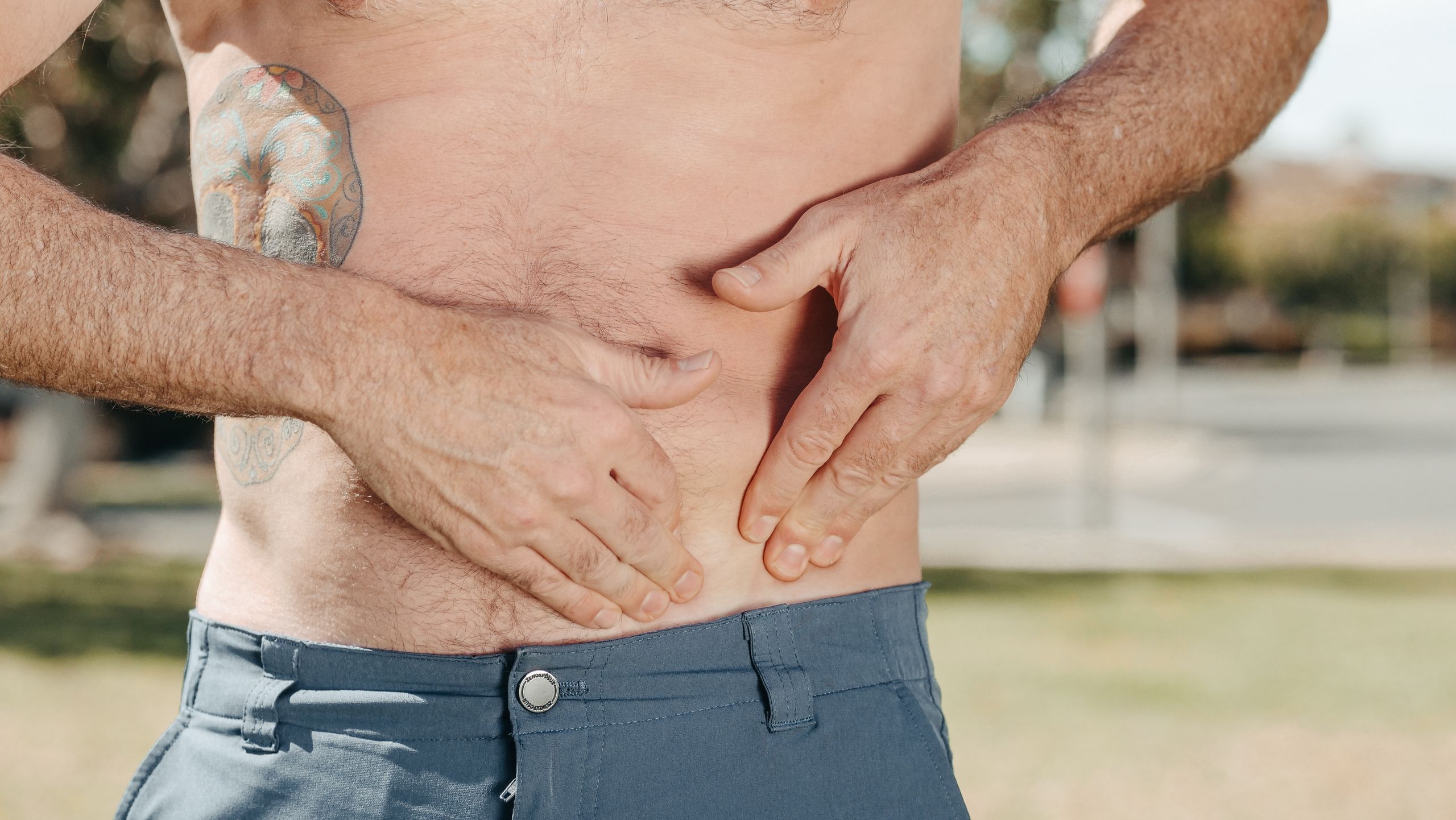
That awareness can become a cycle. You notice something unusual, so you begin paying more attention to it. Perhaps you palpate the area repeatedly, change positions to see whether the sensation persists, or become particularly attentive during exercise. The more attention you give the sensation, the more noticeable it may become.
Repeatedly pressing or manipulating an area can also create irritation and soreness that wasn’t there initially. This doesn’t mean the original sensation was imaginary. Rather, it illustrates how physical sensations and our perception of them can interact. For me, this is still an ongoing process. When I feel an odd sensation, I’ll still fixate on it, but it now takes less and less time for my rational mind to overtake my emotional mind so that I can learn to trust that these sensations are benign.
Of course, the absence of pain doesn’t automatically mean that everything is fine. But learning to distinguish between pain, discomfort, and simple bodily awareness can be useful when describing symptoms to a healthcare professional.
Why Movement May Sometimes Make You Feel Better
Something I’ve noticed in my own experience is that certain abdominal sensations become less noticeable when I’m physically active. Walking, changing positions, or engaging in gentle movement can sometimes make a sensation diminish or disappear altogether. Conversely, prolonged sitting may make it more noticeable. Generally, the more I move (within reason), the better and closer to normal my body feels.
There are several possible explanations for this. Movement can change muscular tension, improve circulation, alter posture, and redistribute pressure through the abdomen. For people who spend considerable time sitting at a desk, tight hip flexors and abdominal muscle tension may also contribute to discomfort in the general region of a previous repair.
This is one reason I’ve become such a strong advocate for regular walking and incorporating movement throughout the day. In addition to spreading my strength training sets throughout the day, I make time for a brisk walk or ruck in the afternoon or evening whenever possible.
However, the fact that a sensation improves with movement doesn’t prove that it’s harmless or establish its cause. It’s simply one potentially useful observation to share with your surgeon.
The Psychological Challenge of Recovering From Multiple Hernia Surgeries
In my experience, this may be one of the most overlooked aspects of hernia recovery. When you’ve undergone surgery and subsequently experienced a recurrence, it’s difficult not to become somewhat vigilant about your body. After all, you’ve already experienced a situation in which a previous repair didn’t hold up as expected. It’s natural to wonder whether another unusual sensation could be the beginning of the same problem. This can also be exacerbated by having a recurrence missed by multiple physical exams and imaging, as was the case with me and many other patients with whom I’ve spoken.
For physically active people, this can become particularly frustrating. You might be lifting weights, practicing martial arts, or performing an exercise you’ve done hundreds of times when you suddenly notice something unfamiliar around your abdomen or groin. Your immediate reaction might be to stop, examine the area, and begin wondering whether you’ve damaged the repair.
Sometimes that concern is justified and deserves medical attention. Other times, the sensation may be unrelated to a recurrence. The difficulty is that we can’t always tell the difference ourselves, and many perfectly normal sensations can overlap with signs of trouble.
I’ve found that having confidence in a thorough medical evaluation is enormously helpful. If an experienced surgeon has examined the area, performed appropriate testing when indicated, and cleared you to resume physical activity, that information deserves considerable weight. However, what has helped me even more is exposure therapy. The more I train and the more I progress gradually, the more I learn to trust the repaired area. Unfortunately, while an exam from a medical professional can be reassuring in the moment, it’s important to be careful to not allow these exams to become a spiral in which such an exam is needed to ease anxiety in the moment, only to need yet another exam shortly thereafter the next time an odd sensation appears.
Having a trusted medical team and positive exam doesn’t guarantee that nothing can ever go wrong, but it provides a much stronger basis for making decisions than repeatedly trying to interpret every unfamiliar sensation on your own.
When Should You Be Concerned About a Recurrent Hernia?
Although unusual sensations can occur without a recurrence, certain symptoms warrant medical attention. A new bulge in the groin or abdomen, particularly one that becomes more noticeable when standing, coughing, or straining, is a common sign of a hernia. Other potential warning signs include persistent or worsening discomfort, a new feeling of heaviness, or pain that interferes with normal activities.
It’s important to remember that not every recurrent hernia produces a visible bulge, particularly in its early stages. If you develop new or persistent symptoms, consulting your surgeon is the most reliable way to determine whether further evaluation is necessary.
Sudden severe abdominal or groin pain, vomiting, abdominal distension, or a painful bulge that cannot be reduced may indicate a more urgent problem and should be evaluated immediately.
The objective isn’t to ignore symptoms. It’s to respond to them appropriately without automatically assuming the worst. Rather than fixating on a specific sensation, look at the overall trend. If you feel an unusual sensation, monitor it over 36-48 hours to see if it improves or disappears. If it’s benign, it will almost always gradually fade away.
Returning to Weightlifting and Martial Arts After Hernia Surgery
For those of us who enjoy physically demanding activities, one of the biggest concerns following hernia surgery is whether we’ll ever be able to train normally again.
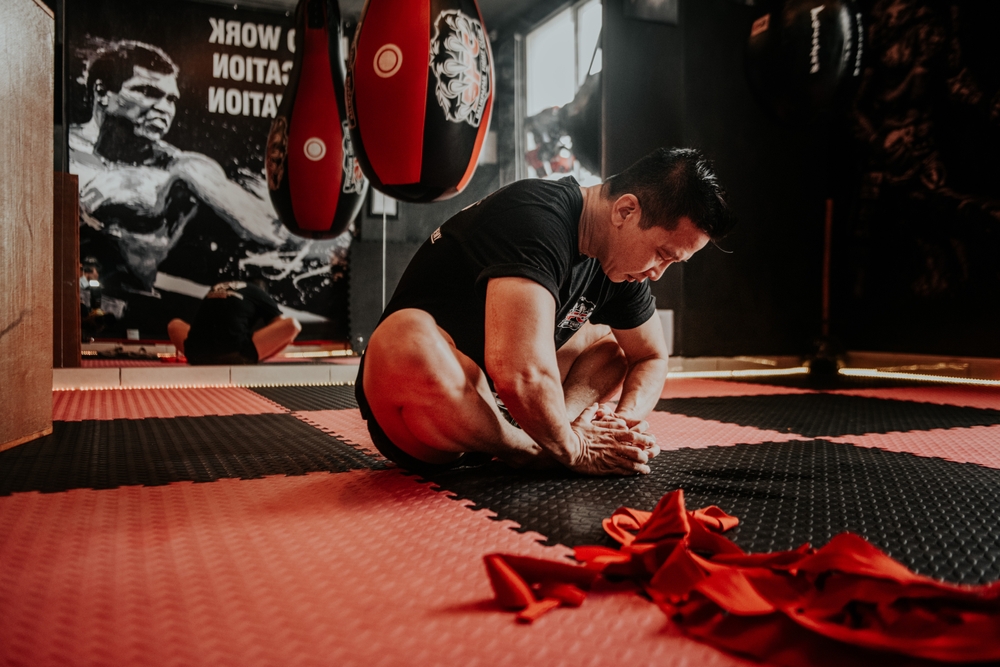
I’ve practiced Brazilian Jiu Jitsu, Muay Thai, boxing, and strength training, all of which place different demands on the abdominal muscles. Returning to these activities after multiple hernia repairs requires patience, appropriate progression, and communication with your surgeon.
But I’ve also come to believe that there’s an important distinction between being appropriately cautious and becoming unnecessarily afraid of movement. Once a repair has healed and your surgeon has cleared you for unrestricted activity, it generally makes sense to rebuild your strength and conditioning gradually rather than avoid physical challenges indefinitely.
This might involve starting with lighter weights, reducing training intensity, and paying attention to how your body responds as you progress. For martial artists, it may also mean emphasizing technical drills and controlled training before returning to more demanding sparring or grappling sessions.
The goal isn’t to eliminate every possible sensation. It’s to regain the ability to participate in the activities you enjoy while recognizing genuine warning signs. I’m a strong proponent of working with a physical therapist after hernia surgery to help guide this return to sport, and to help recondition the core. I worked with the team at Elite Physical Therapy in Bayside, NY after my 2025 repair and it was a game changer. They helped guide my reconditioning at an appropriate pace, provided feedback and reassurance regarding the odd sensations I was experiencing during recovery, and interfaced with my surgeon’s team as they guided my recovery.
Learning to Trust Your Body Again
Perhaps the most important lesson I’ve learned from my experiences with hernia surgery is that physical recovery and psychological recovery don’t always happen at the same pace. A surgical repair may be fully healed, but that doesn’t necessarily mean you’ve regained complete confidence in your body.
You may still find yourself hesitating before lifting something heavy, questioning an unfamiliar sensation, or wondering whether a particular movement could cause another recurrence. Over time, I’ve come to appreciate the importance of balancing reasonable caution with a willingness to move forward.
That means seeking medical evaluation when symptoms warrant it, respecting the advice of qualified surgeons, and recognizing that our bodies aren’t always going to feel exactly the way they did before surgery.
It also means accepting a certain amount of uncertainty. No surgeon can guarantee that a hernia will never recur, just as no athlete can guarantee that they’ll never experience another injury. But living in constant anticipation of another problem isn’t a particularly satisfying alternative.
For me, the objective is to continue training, stay active, and enjoy the physical capabilities I’ve worked hard to maintain. Sometimes, learning to trust your body again is as important as the surgery that repaired it.
Disclaimer: This article reflects my personal experiences and is intended for general educational purposes. It is not medical advice. If you’re experiencing new, persistent, or worsening symptoms following hernia surgery, consult a qualified healthcare professional.