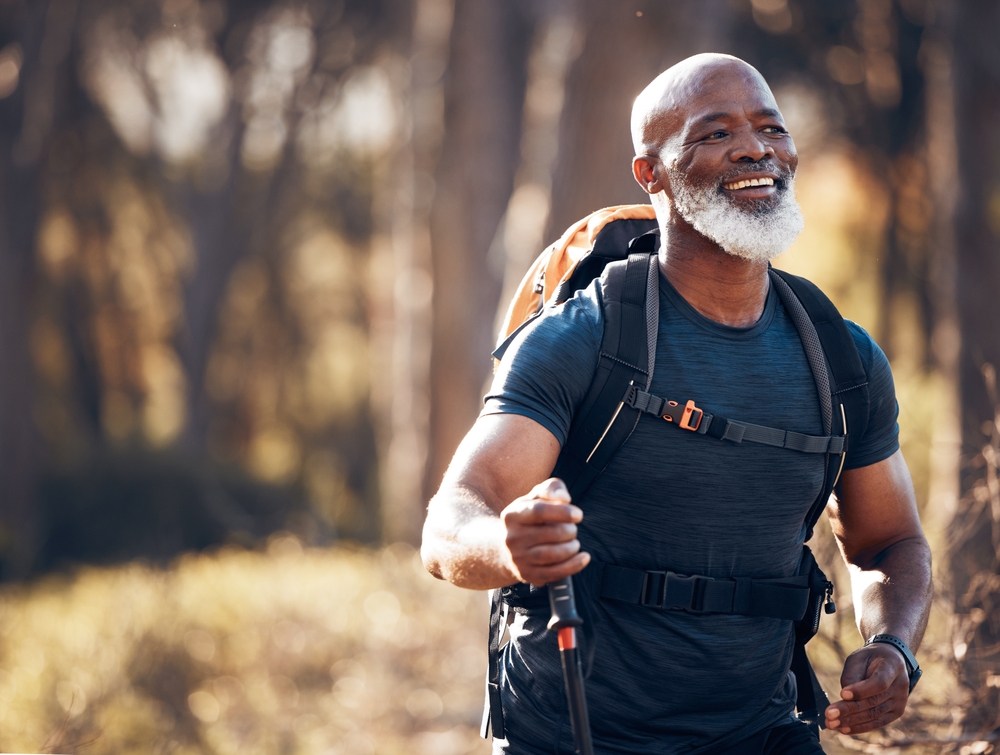
When we think about training for martial arts, walking probably isn’t the first exercise that comes to mind. Most people think about hitting the heavy bag, rolling in Brazilian Jiu Jitsu, sparring, drilling combinations, lifting weights, swinging kettlebells, or doing conditioning work. But as I’ve gotten older, I’ve come to appreciate something much simpler. Walking may be one of the best recovery tools available to martial artists over 50.
Walking isn’t particularly exciting. It doesn’t require special equipment, a coach, or a gym membership. You don’t even have to change your clothes if you’re just going around the block. But that’s part of what makes it so useful.
For older martial artists trying to balance hard training with recovery, work, family, and the normal aches and stiffness that come with getting older, regular walking can fill an important gap between training and complete rest.
Walking Is the Perfect Antidote to Sitting All Day
Many of us spend a significant portion of the day sitting, and that’s especially true for those of us with desk jobs. You might train boxing or Brazilian Jiu Jitsu several times per week and still spend six, eight, or more hours sitting in front of a computer on the days between training sessions.
Our bodies generally don’t feel their best when we remain in one position for hours at a time, and walking gives us a remarkably simple way to break up those long periods of inactivity.
Even a short walk gets the legs moving, changes the position of the hips, increases circulation, and gives the body a break from the posture we’ve maintained while sitting at a desk.
You don’t necessarily need a dedicated hour-long walk, either. Getting up periodically and walking for five or ten minutes can make movement part of the workday rather than something that only happens when you go to the gym.
Walking Can Help Keep the Hip Flexors Moving and Relaxed
This has become particularly important to me. Martial artists ask a lot of their hips. Boxing involves stance, footwork, rotation, and repeated movement of the legs. Brazilian Jiu Jitsu can place the hips into all sorts of positions. Kicking arts such as Muay Thai place still different demands on them. Then we finish training and sit in a chair for hours.
It’s not surprising that the muscles around the hips can sometimes feel tight and uncomfortable. I’ve found walking to be one of the simplest ways to get my hips moving and to help my hip flexors feel more relaxed. Rather than attacking every sensation of tightness with aggressive stretching, sometimes simply getting up and moving is exactly what my body seems to want.
That’s one reason I think walking deserves to be considered part of recovery rather than merely a way of burning calories.
Walking Provides Excellent Steady-State Cardio
Not every conditioning session needs to leave you exhausted. Martial arts already provide plenty of opportunities for high-intensity exercise. Boxing rounds, hard grappling, pad work, sparring, and conditioning drills can all push the cardiovascular system considerably.
Walking provides something different. A sustained walk can be an easy way to accumulate low-intensity, steady-state cardiovascular exercise without adding another difficult workout to your week. For martial artists over 50, that distinction matters.
Recovery becomes increasingly important as we get older. Adding more high-intensity conditioning isn’t always the answer, particularly if we’re already training a combat sport several times per week.
Walking allows us to accumulate additional cardiovascular work while keeping the intensity manageable.
The Benefits Go Beyond Cardio
One of my favorite things about walking is that several benefits can occur at the same time.
If you walk outdoors, you’re not just exercising. You’re getting outside, spending time away from a computer or phone, moving your entire body rhythmically, and potentially getting some daylight and sun exposure.
I also find walking useful for nervous system regulation. After a stressful day, a leisurely walk can feel completely different from another workout. There’s no clock counting down rounds, nobody trying to punch you, and nobody attempting to choke you. You just walk.
That rhythmic movement and change of environment can be an excellent transition between a stressful workday and the rest of the evening. Conversely, an outdoor walk earlier in the day provides daylight exposure while getting you moving before you’ve accumulated hours of sitting.
The cardiovascular exercise is valuable by itself, but the combination of movement, outdoor light, a change of scenery, and time away from the desk is what makes walking particularly useful.
You Can Adjust Walking to Match Your Goal
Walking doesn’t have to mean the same thing every day. That’s another reason it’s such a useful tool for older athletes.
If I’m primarily interested in recovery, I can take a comfortable walk on flat terrain and keep the pace easy. If I want more cardiovascular conditioning, I can walk briskly. If I want to increase the challenge further, I can walk hills.
And if I want walking to become more of a strength and conditioning exercise, I can add a weighted backpack and turn the walk into a ruck.
These variations can produce very different workouts:
Slow walking can be excellent for recovery and relaxation.
Brisk walking can provide more substantial cardiovascular conditioning.
Hill walking increases the cardiovascular and muscular demands without requiring running.
Rucking adds load and can turn an ordinary walk into a more demanding full-body conditioning session.
The important thing is that the intensity can be adjusted according to how you’re feeling and what you’re trying to accomplish. After a difficult martial arts session, an easy walk might be appropriate. On another day, a brisk hilly walk or ruck might become the workout itself.
Walking Requires Almost Nothing
There aren’t many forms of exercise with a lower barrier to entry.
You don’t need a gym, you don’t need weights, you don’t need a heavy bag, and you don’t need a training partner. And in most cases, you don’t even need to drive anywhere. Put on a comfortable pair of shoes, walk out the door, and start moving.
That simplicity becomes especially valuable when you’re trying to maintain an active lifestyle for decades rather than weeks or months.
The easier an activity is to incorporate into everyday life, the more likely you are to actually do it. I’m fortunate enough to live walking distance from my office. On many days, especially when I don’t anticipate having time to get in a full workout, I’ll simply take a longer route to and from the office in addition to my walk home and back for lunch. Just this addition along can help me add another 4,000 to 5,000 steps to my daily count.
Use Walking as a “Movement Snack”
One of the biggest misconceptions about exercise is that it always needs to happen in a dedicated workout. It doesn’t. Walking lends itself perfectly to what I like to think of as movement snacks throughout the day.
If you’ve been sitting at your desk for two hours, take a ten-minute walk. Walk around the block after lunch. Park farther away when you’re running errands. Take a short walk after dinner. If you have a phone call that doesn’t require you to be at your computer, walk while you talk.
A few short walks scattered throughout the day can add up to a substantial amount of movement without ever feeling like another workout that needs to be squeezed into your schedule.
For martial artists over 50, I think this approach can be particularly valuable because we’re already asking our bodies to perform during our actual training sessions.
The goal isn’t necessarily to turn every free moment into exercise. It’s simply to avoid remaining sedentary for hours between workouts. It’s the cardio equivalent of the grease the groove concept that Pavel Tsatsouline spells out in his book Simple & Sinister.
Recovery Doesn’t Always Mean Doing Nothing
When I was younger, I tended to think of recovery as the absence of training.
You trained hard, and then you rested. But as I’ve gotten older, I’ve become much more interested in active recovery. Sometimes my body feels better after moving than it does after sitting around trying to recover. Walking fits beautifully into that approach.
It can get stiff hips moving, provide steady-state cardio, break up long periods of sitting, get you outdoors, and help you decompress mentally, all without necessarily adding another demanding training session.
And because you can adjust the pace, terrain, duration, and even the amount of weight you’re carrying, walking can occupy almost any point on the spectrum between gentle recovery and legitimate conditioning.
For martial artists over 50, the hardest workout isn’t always the one we need. Sometimes the best thing we can do for tomorrow’s training is simply go for a walk.