As we get older, most of us naturally gravitate toward activities we’re already good at. After decades of developing our professional skills, pursuing hobbies, raising families, and navigating life’s challenges, we’ve accumulated a fair amount of knowledge and experience.
There’s something comforting about being competent. We know what we’re doing, we understand what to expect, and we can usually accomplish what we set out to do without too much difficulty.
But I’ve come to believe that one of the most valuable things we can do as we age is to deliberately pursue activities we’re not particularly good at. Not because we enjoy failing, but because the process of struggling, learning, and gradually improving offers benefits that go well beyond the activity itself.
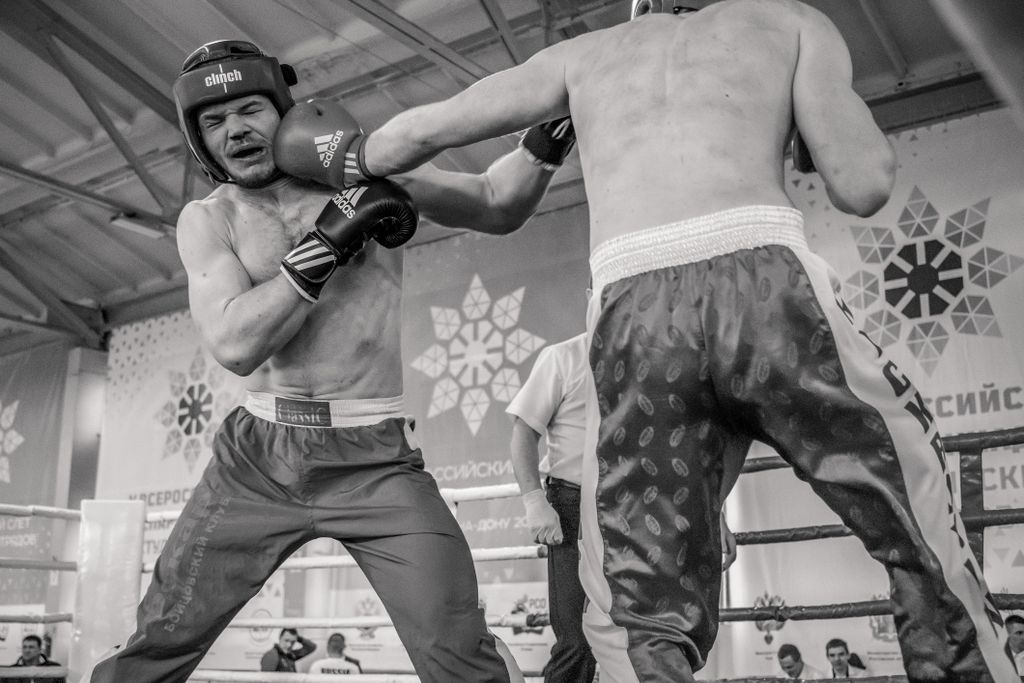
For me, martial arts training has been one of the best ways to experience this. Whether it’s Brazilian Jiu Jitsu, boxing, or another combat sport, there’s always something I don’t know how to do, something I struggle with, or someone who can teach me something new.
And I’ve come to appreciate that being a perpetual student may be one of the greatest benefits of training.
Being a Beginner Can Make Us Feel Young Again
Think about how children approach the world. They’re naturally curious, constantly experimenting, asking questions, making mistakes, and discovering things they’ve never experienced before. They don’t expect to be good at everything immediately. Learning is simply part of their everyday existence.
As adults, particularly as we enter our 50s and beyond, it’s easy to lose some of that curiosity. We become comfortable with our routines and gravitate toward familiar activities. But when we take up something completely new, we’re suddenly confronted with a world we don’t fully understand.
We have questions, we experiment, and we make mistakes. We experience small breakthroughs that might seem insignificant to someone more experienced but feel enormously satisfying to us.
In a sense, being a beginner allows us to reconnect with the childlike curiosity that made learning so exciting when we were young. I think there’s tremendous value in maintaining that mindset as we age.
We may not be able to stop the passage of time, but we can continue approaching life with the curiosity, enthusiasm, and willingness to explore that we associate with youth.
And perhaps that matters just as much as maintaining our physical fitness.
Learning Difficult Skills Challenges the Brain
One of the most compelling reasons to pursue unfamiliar activities is the cognitive challenge they provide. When we perform something we’ve practiced thousands of times, much of the process becomes automatic. That’s generally a good thing. It allows us to perform efficiently without having to consciously think through every step.
But learning a new skill requires something different. We have to pay close attention, process unfamiliar information, coordinate movements, recognize mistakes, and make adjustments.
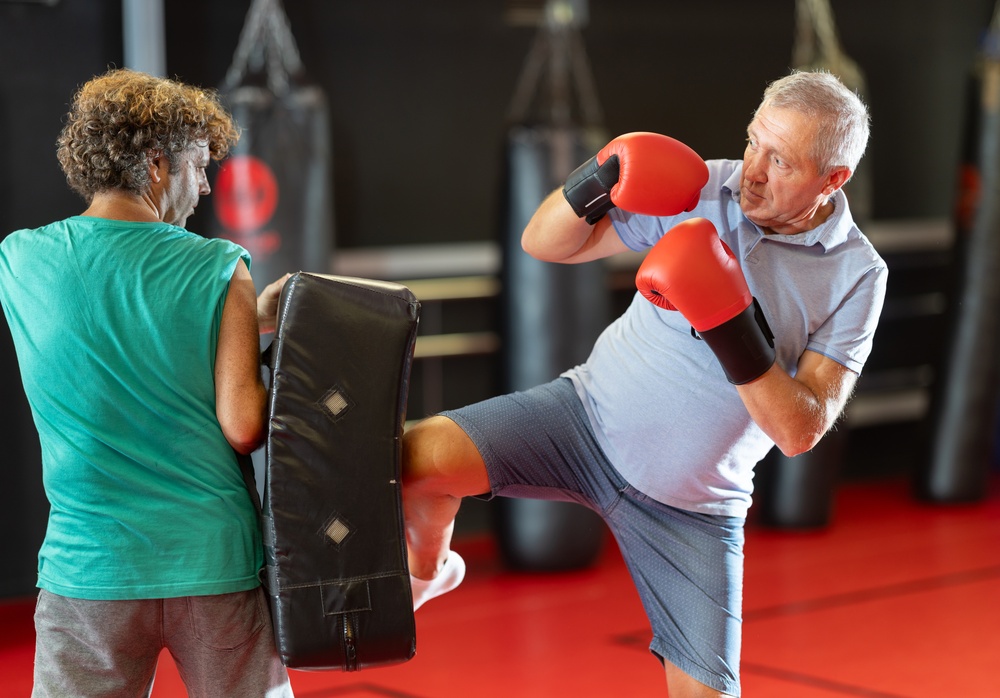
Consider learning a new boxing combination. Initially, you might struggle to coordinate your hands and feet. You may have to consciously think about where to position your weight, how to rotate your hips, and what your opponent might do in response.
With repetition, the movements gradually become more natural. This process involves neuroplasticity, the brain’s ability to adapt through experience and learning.
While we shouldn’t assume that every new physical skill automatically produces broad improvements in cognitive function, learning complex movements can challenge multiple systems involved in attention, coordination, memory, and motor control.
And importantly, our capacity to learn doesn’t disappear when we turn 50, 60, or 70. We may learn differently than we did when we were younger, and some aspects of learning may take longer, but we can continue acquiring meaningful new abilities throughout our lives.
Learning to Be Bad at Something Builds Resilience
Nobody enjoys feeling incompetent. When we’re accustomed to being reasonably successful in our professional and personal lives, it can be uncomfortable to enter an environment where we know very little.
In martial arts, that discomfort can be especially pronounced. You might spend weeks trying to execute a particular technique, only to have it fail repeatedly against a resisting partner.
You might struggle to defend against a younger, faster opponent or discover that something you thought you understood doesn’t work nearly as well as you expected.
It’s frustrating, but there’s something valuable about learning to tolerate that frustration without becoming discouraged.
Instead of interpreting failure as evidence that we’re incapable, we begin to recognize it as information. Why didn’t that technique work? Was my timing wrong? Was I out of position? Did I misunderstand something my instructor explained? This shift in perspective is important.
Failure becomes part of the learning process rather than a judgment about our abilities. And I believe that developing this mindset through martial arts can help us approach challenges in other areas of life with greater patience and resilience.
There’s Something Wonderful About Learning From Younger People
One of my favorite aspects of martial arts training is the opportunity to learn from people who are considerably younger than I am.
At this stage of life, I’ve accumulated decades of experience in business, music, and other pursuits. There are plenty of areas where I have knowledge and expertise to share. But when I walk into a boxing gym or onto the mats, none of that necessarily matters.
A teenager who has spent years developing a particular skill may understand something that I don’t. And I genuinely cherish those moments when someone young enough to be my child, or even grandchild, teaches me something valuable. There’s something wonderfully humbling about it. It reminds me that knowledge and ability aren’t distributed according to age, and that everyone we encounter has the potential to teach us something.
But there’s another aspect of these experiences that I find particularly meaningful. When I look around a martial arts gym and see young men and women voluntarily spending their time working hard, learning difficult skills, developing discipline, and trying to improve themselves, it gives me tremendous hope for the future of our society.
We hear so much negativity about younger generations. Yet here are young people choosing to challenge themselves, accept instruction, overcome frustration, and develop their abilities. I find that inspiring.
And I think there’s something healthy about environments where people of different generations can learn from one another, develop mutual respect, and share a common pursuit.
Being a Beginner Can Make Us Better at Things We Already Know
This is one of the more unexpected benefits I’ve experienced from martial arts training. I’ve found that being a beginner in grappling or boxing, and continuing to approach those activities as a student, has actually helped me improve more rapidly and efficiently in other areas where I already have considerable proficiency.
I believe part of the reason is that learning something unfamiliar forces us to become more conscious of how we learn. When we’re already good at something, it’s easy to operate on autopilot. We rely on established habits, familiar approaches, and techniques that have worked for us in the past.
But when we’re learning a difficult new skill, we have to become more deliberate. We learn to break complex tasks into smaller components. We identify weaknesses, we seek feedback, and we experiment with different approaches and pay attention to which ones produce results.
In boxing, for example, I might spend an entire training session working on one aspect of my footwork or a particular defensive movement rather than simply repeating combinations I’m already comfortable performing. That approach has reminded me of the value of deliberate practice in other areas of my life.
Instead of merely putting in more hours, I find myself thinking more carefully about what I need to improve and how best to accomplish it.
I don’t know whether this experience would be universal, but for me, learning to be a better student has helped me become better at things I already know how to do. And that’s a benefit I hadn’t necessarily anticipated when I began training.
Improvement Can Be More Rewarding Than Proficiency
There’s a particular satisfaction that comes from finally accomplishing something you’ve struggled with for weeks or months.
Maybe it’s successfully executing a technique against a resisting partner. Maybe it’s putting together a boxing combination that previously felt awkward. Or perhaps it’s simply recognizing that something which once required enormous concentration has started to feel natural.
These moments can be extraordinarily rewarding. In fact, I sometimes think that the process of improvement is more satisfying than the achievement of proficiency itself.
When we’re already good at something, meaningful progress can become difficult to recognize. Improvements may be incremental, and we may take our existing abilities for granted. But when we’re beginners, progress can be much more obvious.
Something that seemed impossible a month ago suddenly becomes achievable. And that provides a powerful reminder that we’re still capable of growing, adapting, and becoming better versions of ourselves.
At an age when society often encourages us to think in terms of maintaining our abilities or managing decline, there’s something refreshing about actively developing new ones.
Being a Beginner Keeps Our Egos in Check
By the time we reach our 50s, many of us have spent decades building careers, developing expertise, and establishing our identities.
We may be accustomed to being the person others turn to for advice or guidance. There’s nothing wrong with that. Experience and competence are valuable. But I think it’s equally valuable to regularly put ourselves in situations where we’re not the expert. Martial arts provides a particularly effective way to do this.
Your professional accomplishments don’t help much when you’re struggling to escape a difficult position in Brazilian Jiu Jitsu or trying to understand why your boxing defense keeps leaving you exposed. You have to listen, accept correction, and acknowledge what you don’t know. And sometimes the person correcting you is several decades younger.
I think these experiences encourage a healthy form of humility. They remind us that no matter how accomplished we become, there’s always more to learn. Importantly, humility doesn’t have to mean a lack of confidence.
In fact, I believe there’s a special kind of confidence that comes from being comfortable enough with yourself to admit that you’re not very good at something. You no longer have to protect the image of being competent at everything, and you can simply enjoy being a student.
Challenge Doesn’t Have to Mean Punishment
Of course, there’s an important distinction between pursuing something difficult and subjecting ourselves to unnecessary suffering.
The objective isn’t to choose activities that make us miserable, nor is it to ignore our physical limitations. This becomes especially important as we get older.
In martial arts, for example, we can challenge ourselves through technical drills, controlled sparring, footwork exercises, or learning unfamiliar movements without exposing ourselves to excessive injury risk. We can adjust the intensity while preserving the learning experience. And the same principle applies outside the gym.
Learning a musical instrument, studying a foreign language, taking up dancing, or developing a new creative skill can provide meaningful challenges without requiring us to push ourselves beyond reasonable limits. The key is finding something that demands effort, holds our interest, and gives us room to improve.
Ideally, it should be difficult enough to challenge us but enjoyable enough that we look forward to returning.
Having Something to Improve Gives Us Something to Look Forward To
One of the things I appreciate most about martial arts is that there’s no finish line.
No matter how much we learn, there’s always another technique to understand, another weakness to address, or another level of proficiency to pursue. I find that enormously motivating. It means that when I walk into the gym, I’m not simply exercising to preserve my health or maintain my current physical abilities. I’m working toward becoming better at something, and that gives the activity a sense of purpose beyond fitness.
I think this distinction becomes increasingly important as we age. It’s easy to begin viewing physical activity primarily as a way to slow deterioration: preserve muscle, maintain mobility, protect cardiovascular health, and avoid injury.
Those are all worthwhile goals, but what if we also approached aging as an opportunity to continue acquiring new skills and abilities? What if, instead of focusing exclusively on what we’re trying not to lose, we spent more time thinking about what we might still gain? That’s a much more exciting way to approach the years ahead.
Final Thoughts: Never Stop Being a Student
I’ve come to believe that one of the best ways to remain engaged with life as we get older is to regularly put ourselves in situations where we have something meaningful to learn. Not necessarily because we expect to become experts, but because the process itself is valuable.
Being a beginner encourages curiosity, challenges our minds, builds resilience, and reminds us that we don’t have to be good at everything to enjoy doing it. It also creates opportunities to connect with people we might otherwise never meet, including younger generations who have a great deal to teach us. And perhaps most importantly, it reinforces the idea that growing older doesn’t have to mean becoming increasingly set in our ways.
We can continue to experiment, struggle, make mistakes, experience breakthroughs, and discover abilities we didn’t know we had.
For me, martial arts has been a wonderful vehicle for that process. But it doesn’t have to be martial arts.
Find something that interests you, particularly something you’re not very good at. Allow yourself to be a beginner, and enjoy the process of becoming a little better at it. Because one of the most rewarding things about getting older is discovering how much we still have left to learn.