
When most people think about martial arts, they picture stronger muscles, better conditioning, or learning how to defend themselves. Those are certainly worthwhile benefits, but after years of training in Brazilian Jiu Jitsu, Muay Thai, and now boxing, I’ve come to appreciate something else entirely.
Martial arts challenge the brain just as much as the body. Every class requires you to solve problems, learn new movements, adapt to changing situations, and make decisions in fractions of a second. For adults over 40 (and especially over 50), that mental challenge may be just as valuable as the physical workout.
What Is Neuroplasticity?
Neuroplasticity is the brain’s ability to change throughout life. Rather than remaining fixed after childhood, the brain continuously forms new neural connections, strengthens existing pathways, and reorganizes itself in response to learning and experience.
Every time you learn a new skill, practice a movement, or solve a novel problem, your brain is constantly adapting.
This ability is important because it helps us learn new skills, improve coordination, develop faster reaction time, adapt after injury, and continue growing mentally as we age.
While neuroplasticity naturally slows somewhat over time, it never disappears. Our brains remain capable of learning throughout our lives, especially when we consistently challenge them.
Why Adults Over 40 Often Stop Learning New Skills
One unfortunate reality is that many adults gradually stop putting themselves in situations that require significant learning.
After establishing careers and family routines, it’s easy to settle into familiar patterns. Daily life becomes increasingly predictable. We drive the same roads, perform the same work, exercise in familiar ways, and rely on skills we’ve already mastered. There is nothing inherently wrong with routine. In fact, routine can reduce stress and improve productivity.
The problem is that many people stop regularly asking their brains to solve genuinely difficult new problems. Learning a martial art is the opposite of routine. Every class asks you to become a beginner again.
How Martial Arts Challenge the Brain
People sometimes underestimate how mentally demanding martial arts really are.
Whether you’re learning Brazilian Jiu Jitsu, boxing, Muay Thai, judo, wrestling, or another combat sport, every technique is built upon principles of physics, leverage, timing, balance, distance, and body mechanics.
You’re constantly learning questions like:
- Why does this technique work?
- Where should my weight be?
- Which direction should I move?
- When should I attack?
- When should I defend?
- What happens if my opponent reacts differently?
- What options come next?
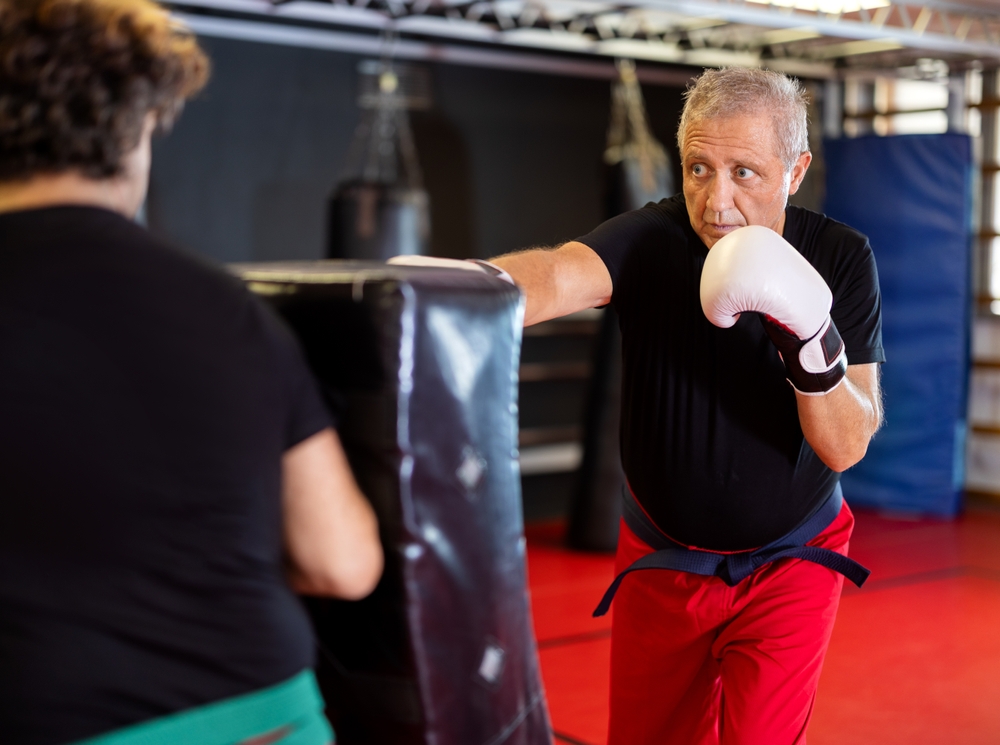
In striking arts, you’re learning how to generate power through efficient movement rather than brute strength. You’re discovering how footwork creates angles, how distance determines safety, and how small changes in timing can completely change an exchange.
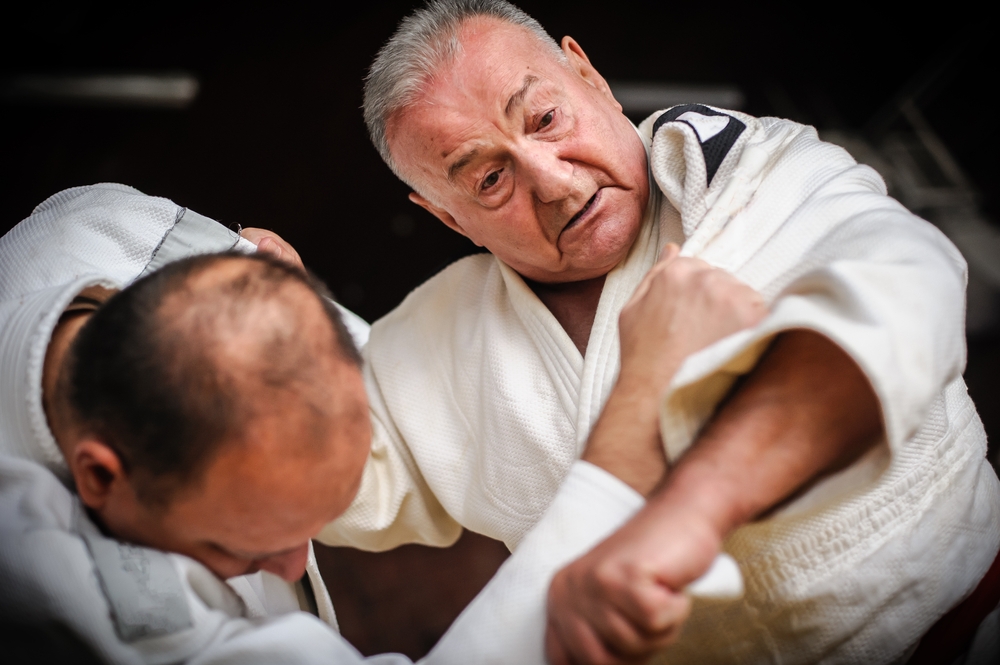
In grappling arts, you’re learning leverage, frames, pressure, balance, and how seemingly small adjustments in body position can determine whether a technique succeeds or fails.
It is physical chess. And just like chess, you’re constantly building mental models that become richer over time.
Learning Something New Every Class
One of my favorite aspects of martial arts is that there is almost always something new to learn.
Perhaps your instructor introduces a different guard pass. Maybe you discover a more efficient jab. Perhaps you finally understand why a particular technique never worked for you before.
Even experienced practitioners regularly find themselves learning new details. When you attend class three, four, or five times every week, you’re repeatedly exposing your brain to novel information.
You’re not simply exercising. You’re learning. You remember combinations, you recognize patterns, you solve movement problems, and you receive immediate feedback. Then you repeat the process a few days later.
That consistent cycle of learning and refinement is one of the most rewarding parts of long-term martial arts practice.
Why Training With Younger Athletes Makes You Better
One unexpected benefit of training later in life is spending time around younger athletes.
At first glance, it might seem like a disadvantage. In reality, it often becomes an education. Younger practitioners frequently move differently. They recover faster, they experiment more aggressively, and they’re willing to scramble into positions that many older athletes would never attempt.
Watching how they solve problems often introduces ideas you would never have considered on your own, and sometimes they force you completely outside your comfort zone. While that isn’t always comfortable, it’s incredibly valuable.
Learning from people decades younger than you is one of the healthiest forms of intellectual humility, and is one of my favorite aspects of training in combat sports.
Realizing that everyone has something to teach me is something that I find energizing, inspiring, and adds to an experience that’s already incredibly rich.
Experience, Strategy, and Creative Problem Solving
One lesson that many older martial artists eventually discover is that trying to beat younger athletes at their own game rarely works.
You probably won’t recover as quickly and you may not move quite as explosively. However, experience encourages something more interesting…creativity. Older athletes often learn to compensate by becoming more efficient. Rather than relying on speed, they improve timing. Instead of forcing techniques, they refine positioning. As an alternative to winning with athleticism, they win with strategy.
Every training session becomes an exercise in problem-solving. How can I conserve energy? How can I make fewer mistakes? How can I guide my opponent toward positions that favor me? How can I use better angles instead of greater strength?
Those questions aren’t signs of decline. They’re signs of growth. In BJJ, I often see older grapplers performing well against younger practitioners by controlling the pace to suit their style, waiting patiently for openings or for their opponent to grow tired, or using top pressure effectively. In boxing, I look to defensive masters such as Pernell Whitaker, who possessed such sublime defensive skills that it enabled him to avoid damage and would often tire out his opponents.
Over time, martial arts become less about overpowering someone and more about understanding movement, making intelligent decisions, and applying techniques with precision.
Martial Arts as Lifelong Brain Training
One reason I enjoy martial arts so much is that there is no finish line. There is always another detail to understand and another skill to improve. There’s always another mistake to fix, and another lesson waiting in tomorrow’s class.
For adults over 40 and 50, that may be one of the greatest gifts martial arts offer. They remind us that our best learning years don’t have to be behind us.
Our bodies may change, our training may evolve, but our ability to learn, adapt, and grow can continue for decades.
Whether you’re stepping into a boxing gym for the first time, tying on a Brazilian Jiu Jitsu belt, or returning to martial arts after years away, you’re doing far more than exercising. You’re giving your brain a reason to keep learning…
…and that may be one of the healthiest habits you can build for the years ahead.