One of the things I’ve come to appreciate most about martial arts training as I’ve gotten older is the opportunity to spend time with people who are considerably younger than I am.
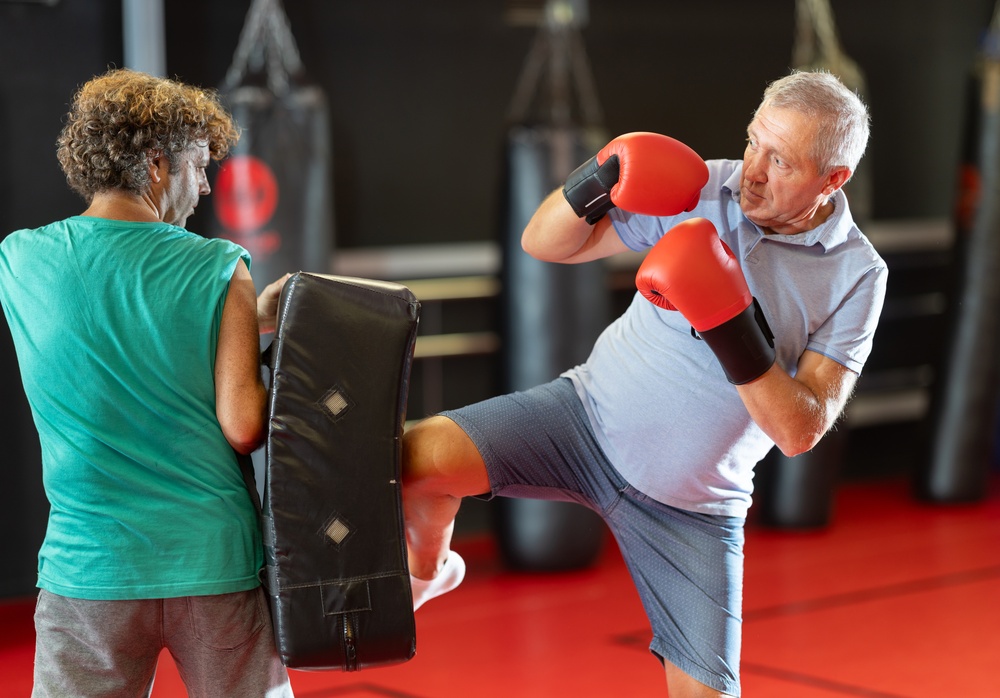
At 57, I regularly find myself training alongside people in their teens, 20s, and 30s. Some are competitive athletes, others are recreational practitioners, and many are simply looking to improve their fitness, learn self-defense, or challenge themselves.
What I’ve discovered is that training with younger people offers benefits that extend far beyond physical fitness or martial arts proficiency. It helps me feel younger, exposes me to different perspectives, gives me opportunities to learn from people with abilities I don’t possess, and allows me to share some of the knowledge and experience I’ve accumulated over the years. Perhaps most importantly, it reminds me that getting older doesn’t mean we have to become disconnected from younger generations.
In fact, I think the relationships we develop with younger training partners can be among the most rewarding aspects of practicing martial arts after 50.
Being Around Younger People Helps Keep Us Young
There’s something invigorating about spending time in an environment filled with youthful energy. Walk into a boxing gym or Brazilian Jiu Jitsu academy, and you’ll often find people in their teens and 20s enthusiastically working to improve their skills, challenging themselves, joking with their teammates, and enjoying the process. That enthusiasm can be contagious.
As we get older, it’s easy to settle into routines that revolve around work, family responsibilities, and familiar social circles. There’s nothing inherently wrong with that, but I think we sometimes lose touch with the curiosity, spontaneity, and excitement that characterize our younger years. Training alongside younger athletes provides a welcome reminder of those qualities.
When I’m in the gym, I’m not particularly concerned with how old I am. I’m focused on learning a technique, improving my footwork, working through a difficult drill, or helping a teammate.
We’re all there for essentially the same reasons, regardless of our ages. And I find that spending time in this environment helps me maintain a younger outlook on life.
Obviously, being around younger people doesn’t reverse the biological aging process. But I believe it can have a meaningful influence on how we think, behave, and approach new challenges.
Sometimes feeling younger begins with continuing to participate in activities that make us feel engaged, curious, and excited about life.
Keeping the Old Man Out
There’s an expression I’ve always liked about trying to “keep the old man out.” To me, it doesn’t mean pretending we’re still 25 or refusing to acknowledge the realities of aging. It means resisting the temptation to become physically and mentally complacent simply because we’re getting older. Martial arts provides a particularly effective way to do this.
When you’re training alongside younger athletes, you’re continually reminded that there’s more to learn, more to improve, and more that your body may still be capable of accomplishing.
You might not have the speed, explosiveness, or recovery capacity you possessed decades earlier. But you can continue developing your technique, improving your conditioning, and becoming a more skilled martial artist.
I also think there’s value in occasionally measuring ourselves against younger practitioners, provided we do so intelligently. The objective shouldn’t be to prove that we can outperform someone half our age. That’s often unrealistic and can lead to unnecessary injuries. Instead, it’s about remaining engaged in a challenging environment and finding ways to continue improving.
Perhaps we compensate for a younger athlete’s speed with better positioning, timing, or anticipation. Or we discover that our conditioning has improved enough to keep up during a demanding training session. Or perhaps we simply recognize that we’re still learning new skills and enjoying a physically challenging activity at an age when many people have stopped pursuing them.
For me, that’s what keeping the old man out is really about. It’s not about denying our age. It’s about refusing to let age become an unnecessary limitation on what we’re willing to attempt.
The Opportunity to Guide Younger Generations
One of the most fulfilling and unexpected benefits of training with younger people has been the opportunity to offer guidance outside the gym.
By the time we reach our 50s and 60s, most of us have accumulated a substantial amount of life experience. We’ve developed careers, navigated difficult situations, made mistakes, learned valuable lessons, and established relationships that may be useful to others.
Sometimes that experience can make a meaningful difference in the life of someone just starting out.
Recently, a young boxer at my gym was interested in applying for an apprenticeship program through a local trade union. As it happened, I knew someone who could help him obtain the information he needed to pursue the opportunity. It was a relatively simple thing for me to do. I made use of an existing relationship to help point him in the right direction. But for a young person trying to establish a career, access to the right information and contacts can be enormously valuable. Experiences like this are particularly rewarding to me.
I’ve also had younger teammates approach me for advice about various aspects of life. Sometimes they’re dealing with challenges I’ve encountered myself. Other times, they’re simply looking for the perspective of someone who has been around a little longer. I don’t presume to have all the answers, and I certainly don’t believe that being older automatically makes someone wiser. But if something I’ve learned through my own experiences can help a younger person make a better decision, avoid a mistake, or recognize an opportunity, I’m always glad to share it.
There’s something extraordinarily fulfilling about realizing that the lessons we’ve accumulated over decades can still be useful to someone else. And martial arts creates opportunities for these relationships to develop naturally.
We aren’t necessarily interacting as employers and employees, teachers and students, or parents and children. We’re teammates who share a common interest. That creates a different kind of relationship, one in which advice and mentorship can emerge organically through mutual respect.
Younger Training Partners Can Make Us Better Martial Artists
Of course, the benefits aren’t limited to what older practitioners can offer younger ones. We also have a tremendous amount to learn from them.
One of the advantages of training with younger athletes is that they often bring greater speed, explosiveness, and athleticism to the gym. When approached appropriately, those qualities can provide valuable challenges that we might not experience when training exclusively with people our own age.
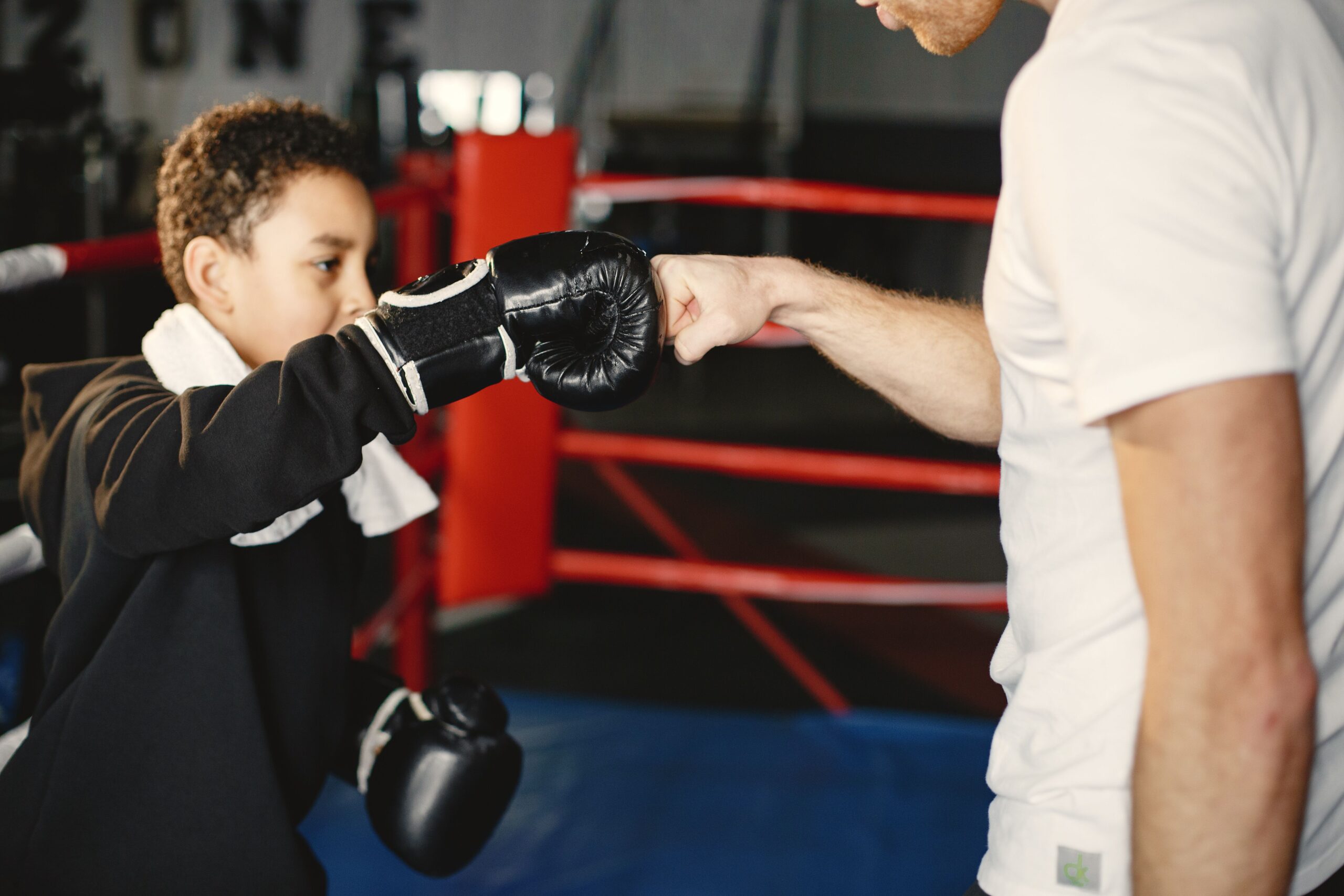
For example, I sometimes participate in partner drills with a 14-year-old teammate at my boxing gym. He’s an excellent young boxer with sharp technique, quick movements, and impressive athleticism. When we train together, he works at a pace and intensity that’s appropriate for the drill and for both of us. But even at that controlled intensity, his speed and technical precision present valuable learning opportunities.
I have to pay attention to my positioning, timing, defense, and reactions. His movements can expose weaknesses in my technique that might be less apparent when working with someone slower or less experienced. And because we’re training cooperatively rather than trying to defeat one another, I can concentrate on making adjustments and improving. I find these sessions enormously beneficial.
There’s an important distinction here between training with someone who challenges your abilities and training with someone who unnecessarily increases your risk of injury. A younger partner who goes too hard, ignores instructions, or treats every drill like a competition may not be an appropriate training partner, regardless of how skilled they are. On the other hand, a younger athlete who understands how to control intensity can be an excellent person to work with.
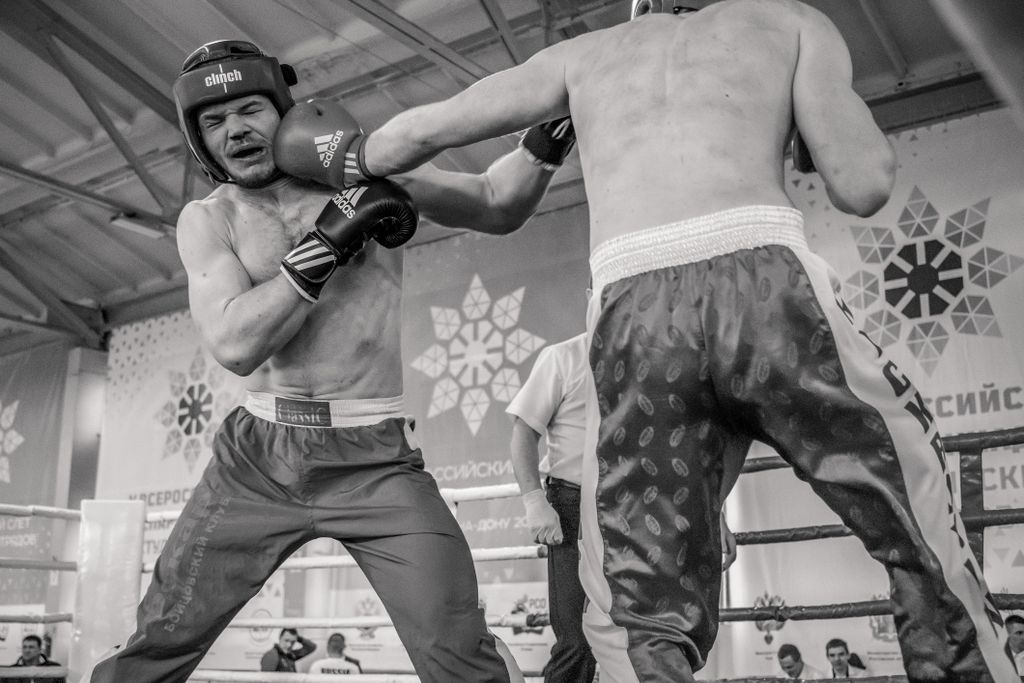
In boxing, particularly, faster punches and sharper movements can help us recognize technical weaknesses, provided the drills are controlled and don’t involve unnecessary head contact. The same principle applies to Brazilian Jiu Jitsu, where younger grapplers may offer greater speed, mobility, and physical resistance.
The key is selecting training partners who understand the purpose of the exercise and are willing to work cooperatively. The best training partner isn’t necessarily someone who’s your age or physical equal. It’s someone who can help you improve while respecting your abilities and limitations.
Learning From Someone Young Enough to Be Your Grandchild
There’s another benefit to training with younger people that I think deserves special attention: it teaches us humility.
By the time we reach middle age, many of us have spent decades becoming proficient in our professions and other pursuits. We’re accustomed to having knowledge and experience that younger people may not possess. But in a martial arts gym, those roles can be reversed.
A teenager may have been boxing since childhood and possess technical abilities that far exceed our own. A young Brazilian Jiu Jitsu practitioner may understand positions and submissions that we’ve never encountered. And if we’re serious about improving, we need to be willing to learn from them.
Personally, I cherish those moments when someone young enough to be my child or grandchild teaches me something valuable. I don’t find it embarrassing or threatening. Quite the opposite. It reminds me that there’s always something new to learn and that knowledge isn’t distributed according to age.
It also reinforces a principle that I believe becomes increasingly important as we get older: we should never become so attached to our own experience that we stop being receptive to the knowledge of others.
In fact, some of the most rewarding relationships in a martial arts gym involve a genuine exchange of knowledge. I might be able to help a younger teammate with a career question or offer perspective on a personal challenge. That same teammate might help me improve my boxing defense or understand a technique I’ve been struggling with.
Neither person needs to be the expert in everything. We simply learn from one another.
Training With Younger People Gives Me Hope for the Future
We hear a great deal of criticism about younger generations. They’re sometimes portrayed as lacking discipline, having short attention spans, avoiding difficult work, or being unwilling to make sacrifices.
But when I look around my boxing gym, I see something very different. I see young men and women voluntarily spending hours developing difficult skills. I see teenagers who are disciplined, focused, thoughtful, and remarkably mature. I see young athletes accepting criticism from their coaches, supporting their teammates, and returning to the gym day after day to work on their weaknesses.
Many of them are balancing training with school, jobs, family responsibilities, and other commitments. And they continue showing up because they want to improve. Remember that 14 year old teammate I mentioned? He trains with his school’s swim team in the mornings, the wrestling team in the afternoons, and then rides his bicycle from Great Neck, NY to Queens Village, NY to train boxing in the evening, after which he rides home to finish his homework. I’m in awe of his discipline and time management skills, and I find that genuinely inspiring.
Of course, a martial arts gym is a self-selected environment. The people who choose to participate in demanding activities may not be representative of their entire generation. But that’s precisely why I value these experiences. They remind me that, despite all the negative commentary we hear about young people, there are countless young men and women who take personal development seriously. They’re willing to work hard, accept challenges, demonstrate discipline, and pursue excellence. And when I see that firsthand, it gives me tremendous hope for the future of our society.
I think older adults can benefit enormously from having regular opportunities to interact with young people in these kinds of environments. It’s much harder to develop negative generalizations about an entire generation when you’re regularly training alongside thoughtful, hardworking members of that generation.
Personal relationships have a way of challenging our assumptions.
Martial Arts Creates Connections Across Generations
One of the things that makes martial arts special is that people of very different ages and backgrounds can participate in the same activity.
A teenager, a 30-year-old professional, and a retired 70-year-old might all find themselves learning the same technique or participating in the same class.
Naturally, their physical abilities and training goals may differ considerably. But they still share a common language. They understand the frustration of struggling with a technique, the satisfaction of finally getting something right, and the discipline required to continue improving. Those shared experiences create opportunities for friendships that might never develop elsewhere.
Outside the gym, our social circles often become increasingly age-segregated. We spend time with colleagues at similar career stages, friends with similar family responsibilities, and people who share our circumstances. There’s nothing wrong with that, but I think we lose something when we rarely interact meaningfully with people from other generations.
Martial arts offers a natural way to bridge that divide. We can learn from younger practitioners, share our experiences with them, and develop friendships based on mutual interests rather than age.
And because we’re participating in a challenging activity together, those relationships can develop a level of respect and camaraderie that goes beyond casual social interaction.
Training Smart Still Matters
None of this means that older martial artists should attempt to train exactly like their younger teammates. In fact, I think the opposite is true.
One of the advantages of growing older is that we hopefully become better at recognizing our limitations and understanding how to work around them. A 20-year-old competitive boxer may be able to tolerate a training schedule or level of intensity that would be inappropriate for someone in their late 50s.
Recovery capacity, injury history, conditioning, and individual circumstances all matter. The goal isn’t to match younger athletes in every aspect of training. It’s to participate in the same environment while making intelligent adjustments.
That might mean emphasizing technical sparring over hard exchanges, selecting cooperative partners, taking additional recovery time, or modifying certain drills. And it means being willing to communicate openly with younger teammates about the kind of training you’re looking for.
I’ve found that many younger athletes are perfectly happy to adjust their pace and intensity when they understand the objective. After all, controlled technical training can be beneficial for them, too.
The ability to execute techniques accurately without relying entirely on speed or power is an important skill at any age. When both partners approach training thoughtfully, the experience can be mutually beneficial.
Final Thoughts: We Have More to Offer Each Other Than We Realize
As I’ve gotten older, I’ve come to appreciate that martial arts offers much more than exercise, self-defense skills, or opportunities to test myself physically. It also provides a community where people of different ages can learn from one another.
Training with younger teammates helps me maintain a youthful outlook, challenges me to continue improving, and reminds me that there’s still plenty of room for growth.
It gives me opportunities to share some of the knowledge and experience I’ve accumulated over the years, sometimes in ways that may make a meaningful difference in someone else’s life. And perhaps most importantly, it allows me to see firsthand how many young people are disciplined, thoughtful, hardworking, and committed to becoming better versions of themselves.
I find that extraordinarily encouraging.
I also think there’s something valuable about recognizing that the exchange goes both ways. Older practitioners have experience, perspective, and sometimes useful connections to share. Younger practitioners bring energy, enthusiasm, athleticism, and skills that we can learn from.
Neither generation has a monopoly on knowledge or wisdom. And when we approach one another with curiosity and mutual respect, everyone benefits.
At 57, I don’t expect to move like a 20-year-old. But I can still train alongside one, learn from one, and perhaps offer something valuable in return.
To me, that’s one of the most rewarding aspects of continuing to practice martial arts as I get older.