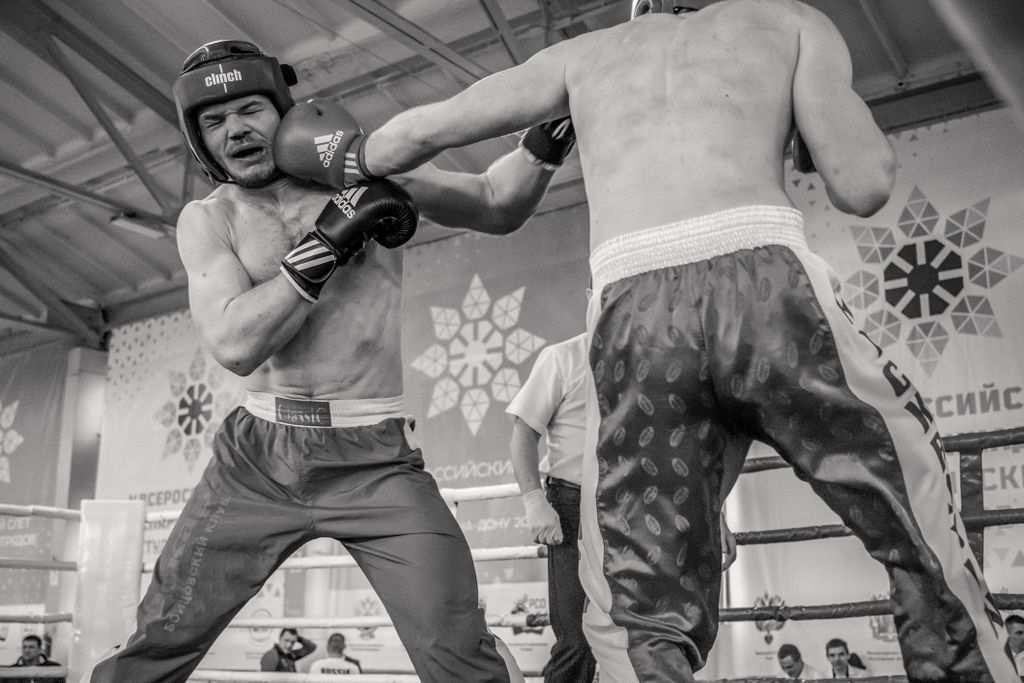

A commonly held misconception about boxing is that sparring has to be brutal in order to be worthwhile.
If you spend enough time online, you’ll eventually see videos of gym wars, bloody noses, knockouts, and people treating sparring like it’s a championship fight. For younger competitors actively preparing for amateur or professional bouts, there may sometimes be a place for harder rounds under proper supervision. But for most people training boxing over 50, especially those of us training for health, longevity, conditioning, and personal growth, I’m increasingly convinced that technical sparring is enough.
At 56 years old, I’m not interested in proving how tough I am anymore. I’m interested in staying healthy enough to continue training for decades. While I don’t have plans to compete in boxing, I still aim to strike a balance between safety and testing my abilities in the ring.
What Is Technical Sparring in Boxing?
Technical sparring is controlled sparring performed at a lighter pace and with lighter contact. The emphasis is on timing, distance management, movement, defense, accuracy, and composure rather than trying to overpower or hurt your partner. Done correctly, technical sparring should allow both training partners to improve while minimizing unnecessary damage.
You still get to train timing development, defensive reactions, cardiovascular conditioning, ring awareness, stress inoculation, and realistic practice under pressure. Even at lighter intensity, there’s still a major difference between hitting a heavy bag and dealing with a live human being moving, reacting, and firing punches back at you. But what you remove is the ego-driven “win the round at all costs” mentality that can lead to injuries and accumulated damage, including the type of cumulative head trauma many older athletes understandably want to minimize.
In many ways, it reminds me of how experienced Brazilian Jiu Jitsu practitioners roll as they get older. Younger athletes often rely heavily on explosiveness and intensity. Older athletes tend to become more technical, more efficient, and more selective about risk. Boxing should be no different.
Why Technical Sparring Makes More Sense for Boxers Over 50
Recovery changes as we age. That doesn’t mean we become fragile, but it does mean we need to train more intelligently.
Most of us over 50 have careers, families, responsibilities, previous injuries, and a growing awareness that longevity matters. We still want challenge, competition, and growth, but we also want to be able to wake up the next morning feeling functional.
Repeated hard sparring can create cumulative wear and tear that simply isn’t necessary for most recreational athletes, so light technical sparring provides a middle ground for older athletes after 50. I’ve noticed that the boxers at my gym who are able to continue training regularly longterm are able to modulate their intensity to minimize recovery time and the risk of damage. They focus on skill development and technique instead of just power and strength. I’m one of several people training at my boxing club who is in their mid-50’s, and we even have a competitor who is 74 years old. From what I’ve observed, the athletes who are able to train combat sports longterm are the ones who pace themselves thoughtfully and intelligently.
It allows you to continue developing real boxing skills, maintain timing and composure, experience live reactions, and enjoy the mental and physical benefits of boxing training without turning every session into a punishment. For many older athletes, that tradeoff makes far more sense long term.
My Approach to Boxing Training After 50
These days, my own approach to boxing revolves around sustainability.
I typically train boxing three times per week while also balancing strength training, mobility work, walking, core strengthening, and recovery work. I keep most of my heavy bag work at moderate intensity (about 50-60%) with a strong emphasis on technique, breathing, rhythm, and clean mechanics rather than simply hitting as hard as possible.
When it comes to sparring, I’m far more interested in working with controlled partners who understand pacing and technical development than trying to prove something through gym wars. Ironically, I think this approach actually improves skill development more than going at 100% intensity all the time.
When sparring becomes overly aggressive, it’s very easy to tense up, abandon technique, and revert to survival mode. Technical sparring allows you to stay relaxed enough to actually learn without sacrificing too much technique, if any. At this stage of life, consistency matters more than engaging in gym wars followed by injuries.
Boxing Is Still One of the Best Activities for Older Athletes
Despite the stereotypes, I think boxing after 50 can be one of the best forms of safe boxing training when approached intelligently.
It improves conditioning, coordination, balance, mobility, reflexes, mental focus, and overall confidence. I also find that it’s great for memory, especially when trying to remember new combinations. Just as important as the physical and mental benefits is the sense of community it brings. The boxing community is incredibly friendly and supportive, and I place high value on seeing my training partners regularly.
There’s also something deeply satisfying about continuing to learn difficult physical skills later in life. You don’t need to become a professional fighter to benefit from boxing training, and doing so doesn’t require reckless sparring.
Longevity Over Ego
One of the most important lessons many athletes eventually learn is that longevity requires humility. Training hard and challenging yourself are both important, but understanding when to dial back intensity is just as important.
These days, I’d rather leave the gym healthy and able to train again tomorrow than “win” a sparring session that ultimately means nothing.
For most boxers over 50, technical sparring offers the best balance between realism, skill development, conditioning, and long-term health. While part of me would still love to test myself in the ring in competition at this age, I don’t believe that the tradeoffs are worth the risk given the heightened physical consequences to hard boxing sparring or competition. If I want to compete, I’ll do so in the Master’s Division in IBJJF Brazilian Jiu Jitsu competitions. For now, limiting my boxing training to focused training and light technical sparring will allow me to reap all the benefits I need from boxing while keeping my body and my brain healthy longterm.