
Most People Get This Wrong About Boxing and Core Strength
When people think about boxing training, they usually picture cardio, shoulder endurance, and possibly some arm work. But that misses the point entirely as the real engine behind boxing is the core and how it interacts with the kinetic chain.
Not “six-pack abs” core but real, functional core strength. We’re talking about the kind of core strength that transfer power, protects your spine, keeps you stable under fatigue, and actually carries over into real life and other sports.
If you train boxing consistently, your core isn’t just getting worked. It’s getting trained in a way most gym routines completely miss. While core strength is necessary in boxing to protect against body shots, one of the least discussed aspects of core strength for boxing is how it transfer force. Every punch thrown and every defensive head movement utilizes the core, so it’s inevitable that training boxing will contribute massively to developing core strength.
What “Core Strength” Actually Means (Not Just Abs)
Before we go further, it’s important to clarify that we’re not talking about visible abs (though that can be a nice side benefit). Instead, we’re talking about real, functional core strength which utilizes the core in the way it was meant to be used.
Real core strength is about:
- Bracing → stabilizing your spine under load
- Rotation → generating and controlling torque
- Anti-rotation → resisting unwanted movement
- Force transfer → connecting lower body to upper body
Most traditional core workouts (crunches, sit-ups) focus far too much on spinal flexion. Personally, I’ve done too many sessions of crunches and sit-ups which left me with sore hip flexors and not enough actual core strength benefits to justify the toll these exercises take on my body. In addition, I find these types of core exercises to be significantly less “post-hernia repair friendly” than many other far more effective core exercises and certainly less so than boxing itself, all of which train the core in the way it’s meant to be used.
How Boxing Actually Builds Core Strength
1. Rotational Power (Where Punches Come From)
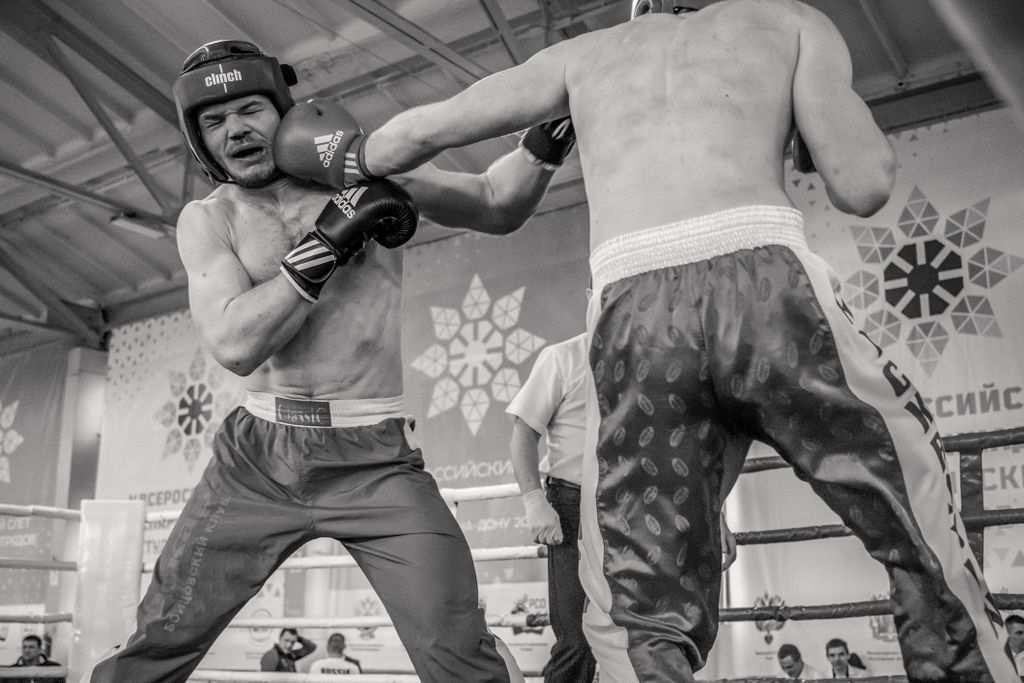
A punch doesn’t come from your arms. It starts from the ground, transfers through your hips, rotates through your core, and finishes through your shoulders and hands. Every cross, hook, and combination is a rotational core exercise under speed. Over time, this builds explosive rotational strength, coordination between hips and torso, and real-world power transfer.
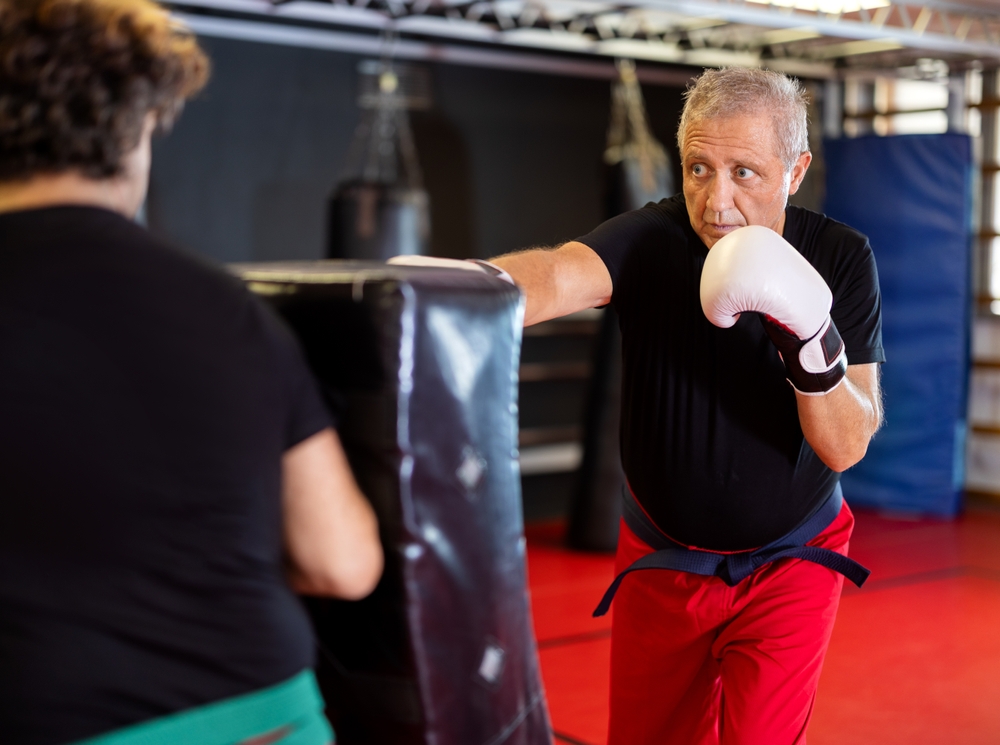
For this reason, I consider my shadow boxing rounds to be non-negotiable to ensure that once I begin my heavy bag work, I’ve dialed in and refined my technique through those initial shadow boxing rounds, being sure to drill the mechanics of how I use my rotational strength efficiently and properly. Without those initial rounds, I will often finish my heavy bag work with tight hip flexors. With the proper cueing from the shadow boxing, I can allow my training session intensity to evolve at a careful and deliberate pace to ensure that I’m avoiding injury as well as training with proper technique.
2. Anti-Rotation (The Hidden Strength Most People Lack)
While you’re throwing punches, your body is also doing the opposite – resisting rotation. Especially during defense, slipping punches, and maintaining your stance under fatigue. This builds stability, balance, and injury resistance (especially for the lower back and core).
This is something most gym programs barely touch. While I also include core exercises such as Pallof Presses and Loaded Carries, I’ve discovered that heavy bag work and shadow boxing are excellent for strengthening the core, and I’ve even found boxing training to have tremendous therapeutic benefits at this stage of my recovery from hernia surgery.
3. Constant Bracing Under Fatigue
In boxing, your core is never “off.” During heavy bag rounds, pad work, sparring, and even jump rope, your core is constantly stabilizing your posture, protecting your spine, and keeping your torso intact.
And it’s doing this while you’re tired, which is extremely beneficial for sport performance and for strengthening the core. In real life (and in sports), injuries don’t happen when you’re fresh. They often happen when you’re fatigued. By experiencing this constant bracing, I find that I can practice bracing under fatigue while I modulate the pace and intensity, which has the dual benefit of general core strengthening as well as helping me to develop good habits that will be protective during sparring and competition.
4. Footwork → Core Connection
Footwork is often overlooked as a core exercise, but it absolutely is. Every step requires stability, balance, and coordination between the lower body and the torso. Good footwork creates efficient energy transfer while poor footwork enables energy leaks (and more stress on your body).
I’ve noticed that even while practicing circle shuffles in the ring, I can feel my core engaging the entire time. Not overly so, but just enough to transfer force and support my body efficiently. It’s naturally a core workout that actually engages the core in a way that it’s used naturally.
5. Jump Rope (Underrated Core Work)
Jump rope isn’t just cardio. It builds rhythmic core engagement, postural control, and elastic stability. This is true especially when you start doing the boxer skip or alternating foot patterns. Your core is working the entire time to keep everything coordinated.
In fact, a recent academic study found that performing double-unders while jumping rope created just as much intra-abdominal pressure as doing heavy barbell deadlifts. Even without the double-unders, it’s difficult to jump rope effectively for any amount of time without some core engagement, especially since we subconsciously engage the core with every jump and every landing.
Boxing vs Traditional Core Training
Let’s be honest. Most core training in gyms involves sit-ups, crunches, leg raises, and other similar movements, and there’s nothing inherently wrong with those. But they don’t train rotation, anti-rotation, real world bracing, or force transfer, which are all things we need to be able to do in real life scenarios.
Boxing does train all of these. That’s why someone who boxes regularly often has a stronger, more functional core than someone doing hundreds of crunches. This is actually one of the reasons why boxing can be an excellent tool for rehabbing the body following hernia surgery when done the right way and at the proper stage in recovery.
Who Benefits Most From Boxing for Core Strength
This is where boxing really shines.
1. Older Athletes (40+)
- Builds strength without heavy spinal loading
- Improves coordination and balance
- Trains stability under fatigue
2. Combat Sports Practitioners (BJJ, MMA)
- Direct carryover to grappling and striking
- Better base and posture
- Improved rotational power
3. People Recovering From Injury (With Proper Progression)
- Emphasizes controlled movement
- Builds stability gradually
- Avoids excessive compression (compared to heavy lifting)
A Simple Boxing-Based Core Routine (10 Minutes)
You don’t need a complicated program.
Try this:
3 rounds (3 minutes each):
- 1 min shadowboxing (focus on rotation)
- 1 min light punches on bag (controlled, not max effort)
- 1 min jump rope
Rest: 1 minute between rounds
Focus on:
- Staying relaxed
- Controlled breathing
- Engaging your core—not forcing it
What Most People Miss
The biggest mistake people make is thinking that “boxing is just cardio”. It’s not. Boxing trains strength, coordination, stability, power, how to utilize the kinetic chain, and how to perform under fatigue. And at the center of all of that is your core.
And of course, boxing trains creativity, strategy, strength, endurance, and creates new neural pathways, but those things are beyond the scope of this post.
Final Thoughts
If your goal is a stronger core, better movement, and real-world strength, then boxing is one of the most effective (and underrated) ways to get there.
Not because it isolates the core, but because it trains the core the way it’s actually meant to function in daily life.