Returning to combat sports after surgery can be surprisingly complicated. Whether you’re recovering from hernia repair, orthopedic surgery, or another procedure, one of the most common mistakes athletes make is assuming that healing automatically means they’re ready to train again. I learned the hard way that returning to BJJ, boxing, or other combat sports requires more than simply waiting for tissues to heal.
One of the biggest mistakes athletes make when returning to sport after surgery is assuming that once the body has healed, it is fully prepared for sport again. I understand why people think this way as I thought this way too. When a surgeon tells you that you’re “cleared,” it’s natural to assume that means your body is ready to return to normal training. Especially if you’re already back to lifting weights, running, hitting the heavy bag, or doing conditioning work without pain. It’s also very easy to underestimate the amount or type of rehab that’s needed to safely begin reentry into athletic activity.
I’ve come to believe there’s a major difference between healing and being truly ready to return to sport, and understanding that difference may be especially important for older combat athletes. Having experienced a hernia recurrence, I know about this firsthand. My surgeon cleared me to return to Brazilian Jiu Jitsu just six weeks after my 2023 robotic hernia surgery. I was skeptical, but he insisted. I took time to recondition my body, I eased back into BJJ very slowly starting only with drilling and eventually light flow rolling with trusted partners, and I still acquired a recurrence about 4.5 months post-op.
Most surgical recovery guidelines are designed around helping patients return safely to everyday life. For highly active athletes who plan to return to Brazilian Jiu Jitsu, boxing, wrestling, or other combat sports, those guidelines may not fully address the unique demands of sport-specific reconditioning.
Unless you’re a professional athlete with a team guiding your recovery, most amateur athletes have only a limited understanding of what is required to safely return to combat sports after surgery. That knowledge gap can sometimes mean the difference between a successful return and a frustrating setback.
Healing Is Not the Same as Sport Readiness
A surgically repaired area can be structurally intact long before it is truly conditioned for the demands of combat sports. That distinction matters a great deal. Many athletes can, walk without pain, lift weights, do cardio, and even feel “strong” while still not being fully prepared for explosive twisting, sudden bracing, awkward scrambles, rotational force, or the unpredictable loading that happens during live sparring or grappling.
This is especially true in Brazilian Jiu Jitsu. BJJ combines torsion, compression, hip flexion, rotational force, and sudden changes in direction in ways that are difficult to fully simulate during ordinary exercise.
You may feel completely fine until one awkward moment exposes the fact that your body wasn’t fully adapted yet to those specific demands. This is exactly what happened to me. I was almost back to rolling at my pre-surgical intensity when I found myself caught in a bad position during one particular round. My torso twisted unexpectedly and I felt a sharp stabbing pain in my lower abdomen. This later developed into the sensation of a rock buried in my pelvis and I saw a new bulge near the surgical area. My 2025 post-operative report mentioned malpositioned mesh and small femoral and iliac defects that needed to be addressed.
I thought that I had taken enough time to rehabilitate my body, especially since I had followed my surgeon’s post-op guidance faithfully and took time to do core strengthening exercises and solo BJJ drills. While I can’t say with certainty why my recurrence occurred, the experience taught me an important lesson: healing and sport readiness are not the same thing.
In reality, it’s extremely important to take the time to recondition the hip flexors, strengthen the core, do anti-rotation exercises, and much more in preparation for a return to combat sports. I like to think that I know quite a bit (for a layperson) about conditioning and recovery, but based on how much I learned during the process of working with my physical therapist after my 2025 surgery, I realized how much I don’t know, and why it’s so helpful to work with a professional during recovery. In my experience, many athletes receive limited guidance on the sport-specific conditioning required for a return to combat sports, which makes working with a knowledgeable physical therapist especially valuable.
Returning to Combat Sports After Hernia Surgery: The Missing Step
One of the biggest challenges in returning to Brazilian Jiu Jitsu after hernia surgery is that BJJ places unique demands on the body. Unlike walking, jogging, or traditional strength training, grappling involves unpredictable twisting, rotational force, bridging, scrambling, and sudden bracing under load.
That’s why many athletes feel physically recovered long before they’re fully prepared for the demands of live rolling.
Why This Matters More After 40
As we get older, recovery changes. That doesn’t mean we’re fragile. But it does mean that tissues remodel more slowly, recovery margins become narrower, and the consequences of overload can become more significant.
Many older athletes also carry years or decades of accumulated wear from old injuries, scar tissue, joint degeneration, previous surgeries, and asymmetries that younger athletes may not yet have. That means returning to combat sports after surgery may require a more gradual and intentional progression than many younger athletes are used to. For example, I currently struggle to balance my boxing training with keeping my hip flexors relaxed. If I don’t do daily stretching and walking, and if I don’t do enough rounds of slow shadow boxing to dial in my technique, I can find myself with extremely tight hip flexors after too many rounds on the heavy bag.
Unfortunately, most athletes aren’t given much guidance beyond: “Take it easy for a few weeks, then gradually return to activity.”
But what does “gradually” actually mean for a combat athlete? Does it mean drilling only? Light positional sparring? No hard bridging? No explosive takedowns? Limited rounds? No competition intensity?
Many of us are left trying to figure this out on our own. The issue becomes even more unclear once we realize that as combat sport athletes, our baseline level and intensity of activity is significantly higher than the general population, so we may need to dial back our training even more than the average patient during recovery.
Patients who have a higher baseline level of strength and athleticism than the average patient can easily underestimate the intensity of their activity post-op simply because we’re accustomed to pushing our bodies harder than most of the rest of the population. Working with a professional can help us to modulate our volume and intensity to account for how the body is still healing from the trauma of surgery and adapting to a new normal.
Combat Sports Create Unique Demands
One thing I’ve realized is that combat sports place demands on the body that many people, including most medical professionals, may not fully appreciate unless they’ve actually trained. There’s a huge difference between jogging or lifting weights and getting caught underneath another grown man twisting your hips while you try to escape side control.
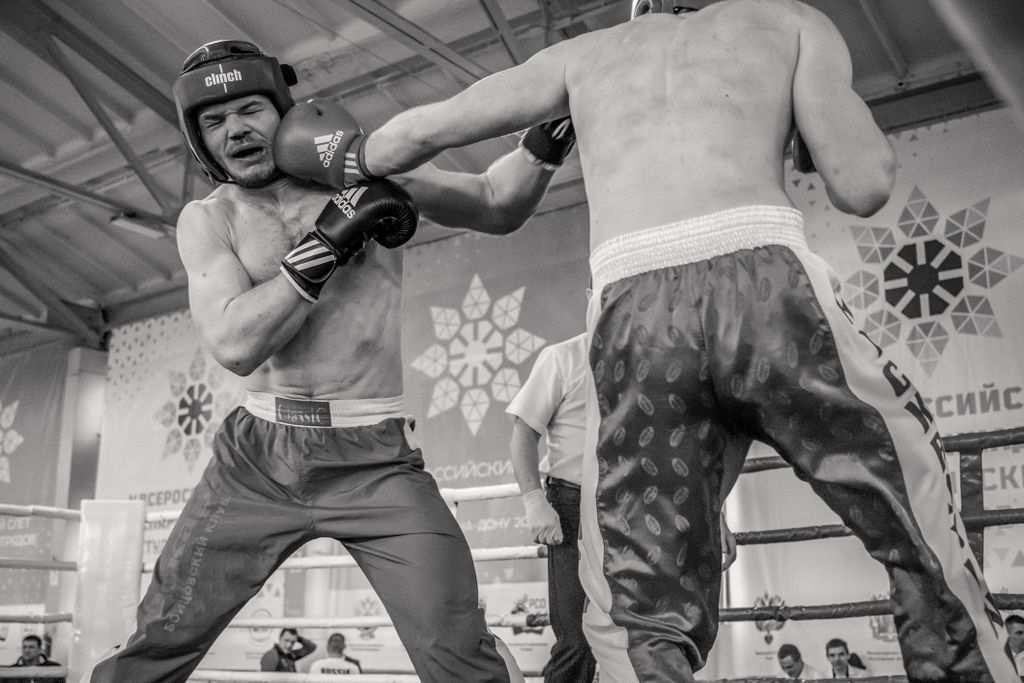
The same is true to a certain extent in boxing. Heavy bag work, hard sparring, and rotational punching mechanics all place significant stress through the core, hips, pelvis, and lower abdominal wall. The challenge is that these stresses are not always obvious until the body is exposed to them repeatedly over time.
What I Would Do Differently
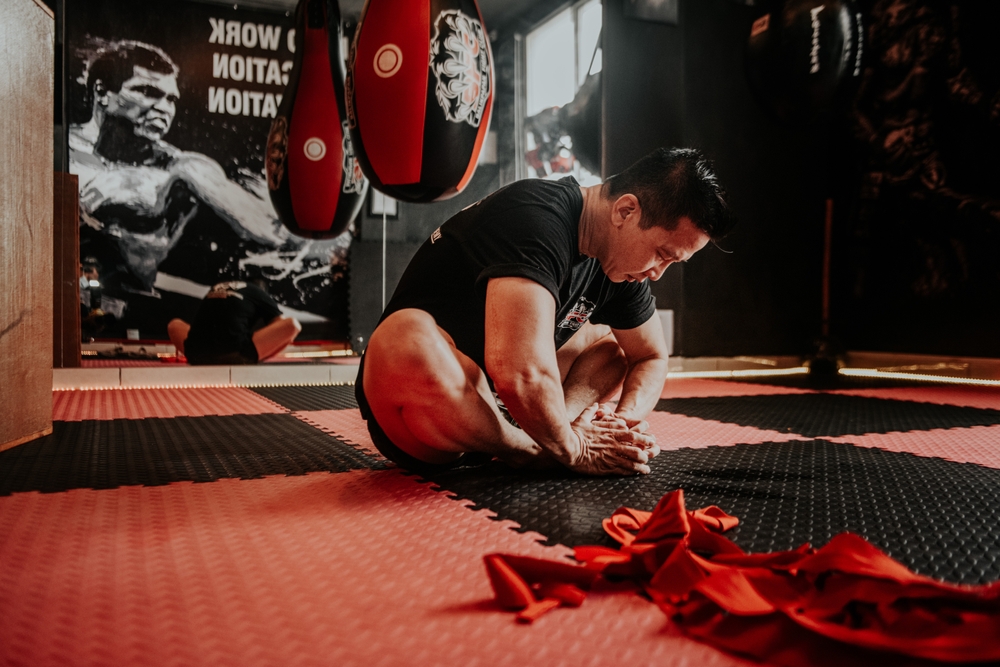
Looking back, I don’t think the answer is fear or inactivity. I still believe movement is essential. Strength training, conditioning, and athletic identity all matter. But I’ve since learned that there’s enormous value in longer ramp-up periods, gradual exposure to sport-specific forces, technical training before hard sparring, and respecting the difference between feeling “better” and being fully conditioned, especially after surgery.
If I could give one piece of advice to older combat athletes recovering from an injury or operation, it would be this: Don’t judge readiness only by whether you feel pain or discomfort. Judge readiness by whether your body has been progressively reconditioned for the actual demands of your sport. Those are not always the same thing. It’s possible to feel ready and to be capable of training without feeling any warning signs. That’s why it’s so important to treat recovery slowly and methodically, and to always err on the side of caution.
The Goal Is Longevity
At this stage of life, I’m less interested in proving toughness and more interested in staying in the game for the long haul. I’ve learned that healing and sport readiness are not the same thing. One happens naturally with time. The other requires deliberate effort, patience, and progressive conditioning.
For many of us, the goal isn’t to train exactly the way we did at 25. The goal is to still be training at 55, 65, and beyond. That’s why I believe recovery shouldn’t end when the surgeon says you’re healed. Recovery ends when your body is truly prepared for the demands of your sport.
Looking back, one of my biggest mistakes was assuming that feeling good and performing well during exercise meant I was fully prepared for every demand that BJJ might place on my body. Those aren’t necessarily the same thing. A heavy bag workout, a strength session, or a conditioning workout can feel great while still leaving gaps in sport-specific preparedness.
Frequently Asked Questions
Does healing mean you’re ready to return to sport?
No. Healing and sport readiness are related but not identical. A repaired area may be structurally healed before it is conditioned for the demands of sport.
How long should you wait before returning to combat sports after surgery?
The answer depends on the procedure, the athlete, and the demands of training. Clearance from a surgeon is only one part of the equation. Progressive reconditioning is equally important.
Why do athletes get injured after being medically cleared?
Medical clearance generally means the body has healed sufficiently for activity. It does not necessarily mean the athlete has rebuilt the sport-specific strength, mobility, and conditioning needed for competition.