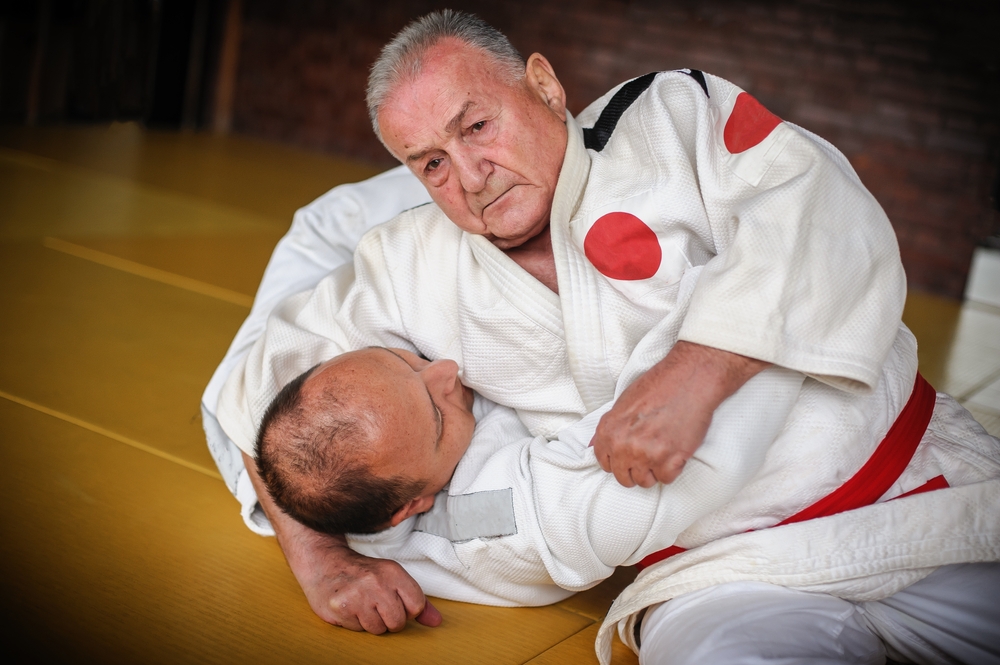

I believe that most of the results we get from training come from the basics: consistent exercise, quality sleep, adequate protein, and a generally healthy diet. There are countless supplements on the market promising everything from rapid muscle growth to miraculous recovery, but most of them don’t make it into my daily routine. If you’re over 50 and train boxing, BJJ, judo, wrestling, or another combat sport, these are the only two supplements that have earned a permanent place in my daily routine.
I get asked fairly often what supplements I recommend for combat sports athletes over 50. My answer usually surprises people because it’s such a short list. Rather than chasing the latest marketing trend, I’d rather focus on the few supplements that have both a reasonable evidence base and a practical purpose in my own training.
Before worrying about supplements, I’d encourage almost anyone to make sure they’re consistently getting enough daily protein. For most older athletes, that will have a far bigger impact than buying another expensive supplement. But for athletes who are already consuming sufficient amounts of protein, it can be worth considering adding creating and collagen peptides into the mix, depending upon your goals.
Are Creatine and Collagen Peptides Worth It After 50?
Of all the supplements on the market, only two have earned a permanent place in my kitchen cabinet: collagen peptides and creatine monohydrate. While I still take a multivitamin (just in case) and magnesium to support sleep, I consider those optional. The two supplements I consistently prioritize for training, recovery, and healthy aging are collagen peptides and creatine monohydrate.
As a combat sports athlete in my mid-50s who plans to keep training for many years to come, these are the two supplements that I take every single day.
Collagen Peptides
My interest in collagen peptides started after my hernia surgery.
During my recovery, I spent a lot of time reading about healing and the role that collagen plays in repairing and maintaining the body’s connective tissues. While collagen peptides are certainly not a miracle supplement, I felt that they were one of the few supplements that made logical sense for someone trying to optimize healing.
One of the reasons I started taking collagen peptides was the hope of supporting the production of high-quality collagen during my recovery process. Our bodies are constantly remodeling tissue, and after surgery, that process becomes especially important. Collagen peptides are far from being a miracle supplement with regard to recovery from abdominal surgery, but they are thought to at least offer some modest benefit.
Even now that I’m fully recovered, I’ve continued taking collagen peptides every day. Why? Because as we get older, maintaining healthy fascia, tendons, ligaments, and connective tissues becomes increasingly important. I don’t expect collagen peptides to make me bulletproof. I don’t think they are going to magically prevent injuries. But if they provide even a modest benefit in helping my tissues stay healthy while I continue training into my 50s and beyond, that’s enough reason for me to keep taking them.
I also pair my collagen peptides with vitamin C and zinc. Both nutrients play important roles in collagen formation and tissue repair, and they’re a simple addition to a daily routine that’s already easy to maintain.
Every morning, I stir collagen peptides into my coffee. It’s become so automatic that I don’t even think about it anymore. It takes about ten seconds and requires virtually no effort.
Creatine
The second supplement I take every day is creatine monohydrate. Unlike collagen peptides, creatine has been extensively studied for decades and has one of the strongest evidence bases of any sports supplement available.
Most people associate creatine with strength athletes and bodybuilders, but I think it has tremendous value for older athletes as well. For me, one of the biggest benefits of taking creatine has been for recovery. Combat sports training places a lot of demands on the body, whether that’s Brazilian Jiu Jitsu, boxing, Muay Thai, strength training, or simply maintaining an active lifestyle. Anything that helps support recovery is worth considering.
I also suspect that creatine may have provided some modest benefit during my surgical recovery process. While I can’t prove it, enough evidence exists regarding creatine’s role in muscle preservation and cellular energy production that I felt it was worth continuing throughout my recovery.
What has surprised me the most, however, is the effect creatine appears to have on cognitive function. There is growing evidence suggesting that creatine may support brain health, cognitive performance, alertness, and mood. I’ve personally noticed that on days when I didn’t get enough sleep the night before, creatine seems to help me feel more mentally sharp and functional.
On those occasional sleep-deprived mornings, I’ll sometimes take a double serving. While I still can’t replace a good night’s sleep, I do feel that it helps me function better than I otherwise would.
One interesting thing I learned during my recovery was that my surgeon also takes creatine. Hearing that from someone whose entire career revolves around human performance, tissue healing, and physical function certainly reinforced my confidence that I was on the right track.
What About Weight Gain?
One concern that many people have about creatine is weight gain. In my experience that’s true, but only partially.
Creatine does tend to increase water retention within the muscles, and that can cause a modest increase on the scale. I’ve certainly noticed that. But I’ve found that the tradeoff is well worth it.
Even with a slight increase in body weight, I’ve been able to maintain lean muscle mass, support my training, and continue feeling strong and athletic. For me, that’s a worthwhile exchange.
Why I Don’t Take More Supplements
I’m not opposed to supplements, but I’m skeptical of marketing claims. I’d rather spend my money on quality food, train consistently, sleep well, and cover the basics before looking for marginal gains from another powder or pill.
Final Thoughts
If I could only keep two supplements in my daily routine, creatine monohydrate and collagen peptides would be the last ones to go. As a combat sports athlete in my mid-50s, they’ve become simple habits that fit naturally into my long-term approach to health and training. Neither one is a magic solution. Neither one can compensate for poor sleep, inconsistent training, or a bad diet. But as someone who intends to continue training, lifting, boxing, and staying active for decades to come, I believe both offer enough potential upside to justify the small daily investment.
At this stage of life, I’m not looking for shortcuts. I’m looking for ways to keep my body healthy, resilient, and capable of doing the things I love for as long as possible.
Frequently Asked Questions
Do I think everyone over 50 should take creatine?
I’m not a doctor, and everyone should make their own decisions in consultation with their healthcare provider. That said, I think creatine is one of the few supplements with a truly impressive body of research behind it. For active people over 50, it appears to offer benefits for strength, recovery, muscle preservation, and even cognitive function. Aside from the possibility of some modest water-related weight gain, I think the potential upside is significant enough that it’s worth serious consideration.
Do collagen peptides really work?
I’m not a medical professional, but my impression from reading the available research is that there is legitimate evidence suggesting collagen peptides can be beneficial. The bigger question isn’t whether they work at all, but rather how much they actually help in real-world situations. I certainly don’t think they’re a miracle supplement, but the available literature suggests they may offer at least modest benefits for connective tissue health and recovery. For me, that potential upside is enough to justify taking them every day.
Can supplements replace good nutrition?
Absolutely not. In my opinion, a nutrient-dense diet should always be the foundation. Consistent training, quality sleep, adequate protein, and healthy eating habits will almost certainly have a much bigger impact than any supplement ever will. Supplements should be exactly what their name suggests: supplementary.
Why don’t I use protein powder every day?
Whenever possible, I prefer to get my protein from whole, minimally processed foods. Chicken, fish, lean beef, Greek yogurt, eggs, and other natural protein sources make up the overwhelming majority of my daily intake. I have nothing against protein powder and will occasionally use it if I’m having trouble meeting my protein goals, but I don’t view it as my first choice. For me, real food comes first whenever it’s practical.
For anyone who’s curious, the collagen peptides I currently use are Sports Research Collagen Peptides, and the creatine I use is Nutricost Creatine Monohydrate. I’ve linked both below.
To view Sports Research Collagen Peptides on Amazon, click here.
To view Nutricost Creatine Monohydrate on Amazon, click here.
BudoBelly is a participant in the Amazon Services LLC Associates Program, an affiliate advertising program designed to provide a means for us to earn fees by linking to Amazon.com and affiliated sites.